Story
Loading the latest story
Please wait while the article is prepared.
Loading article content…
Loading article content…
Story
Please wait while the article is prepared.
Loading article content…
Loading article content…

Education
At its October Youth Empowerment Programme, the foundation brought together speakers who urged young people to use AI to solve local problems and turn waste materials into economic opportunities.
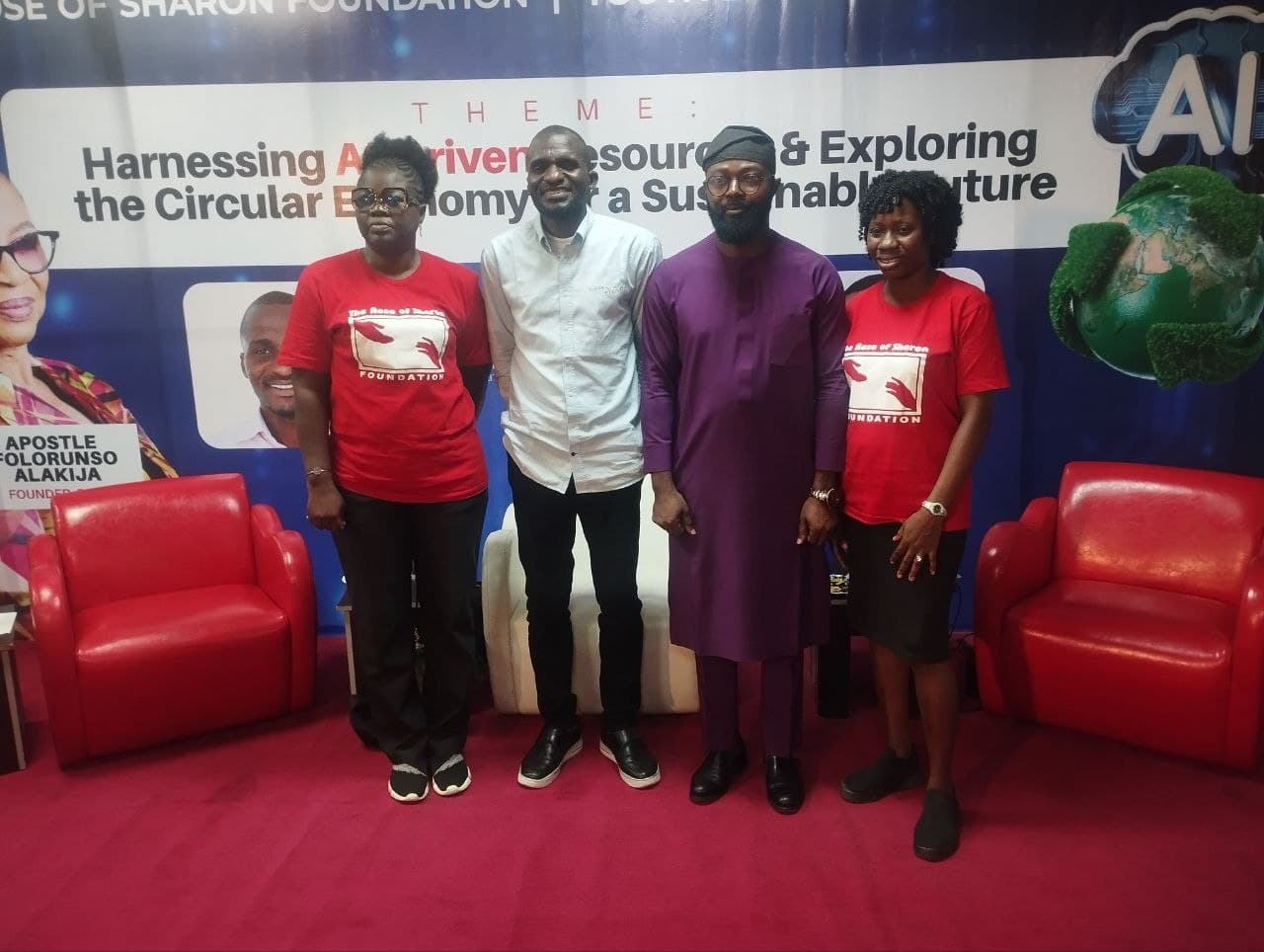
The Rose of Sharon Foundation has urged Nigerian youths to develop locally relevant artificial intelligence (AI) solutions to address societal problems, improve productivity and create economic opportunities.
The foundation also called for greater participation in the circular economy, stressing that waste materials could be converted into valuable resources to generate income and promote environmental sustainability.
The call was made at the foundation’s October 2026 Youth Empowerment Programme (YEP), themed, “Harnessing AI-Driven Resources & Exploring the Circular Economy for a Sustainable Future.”
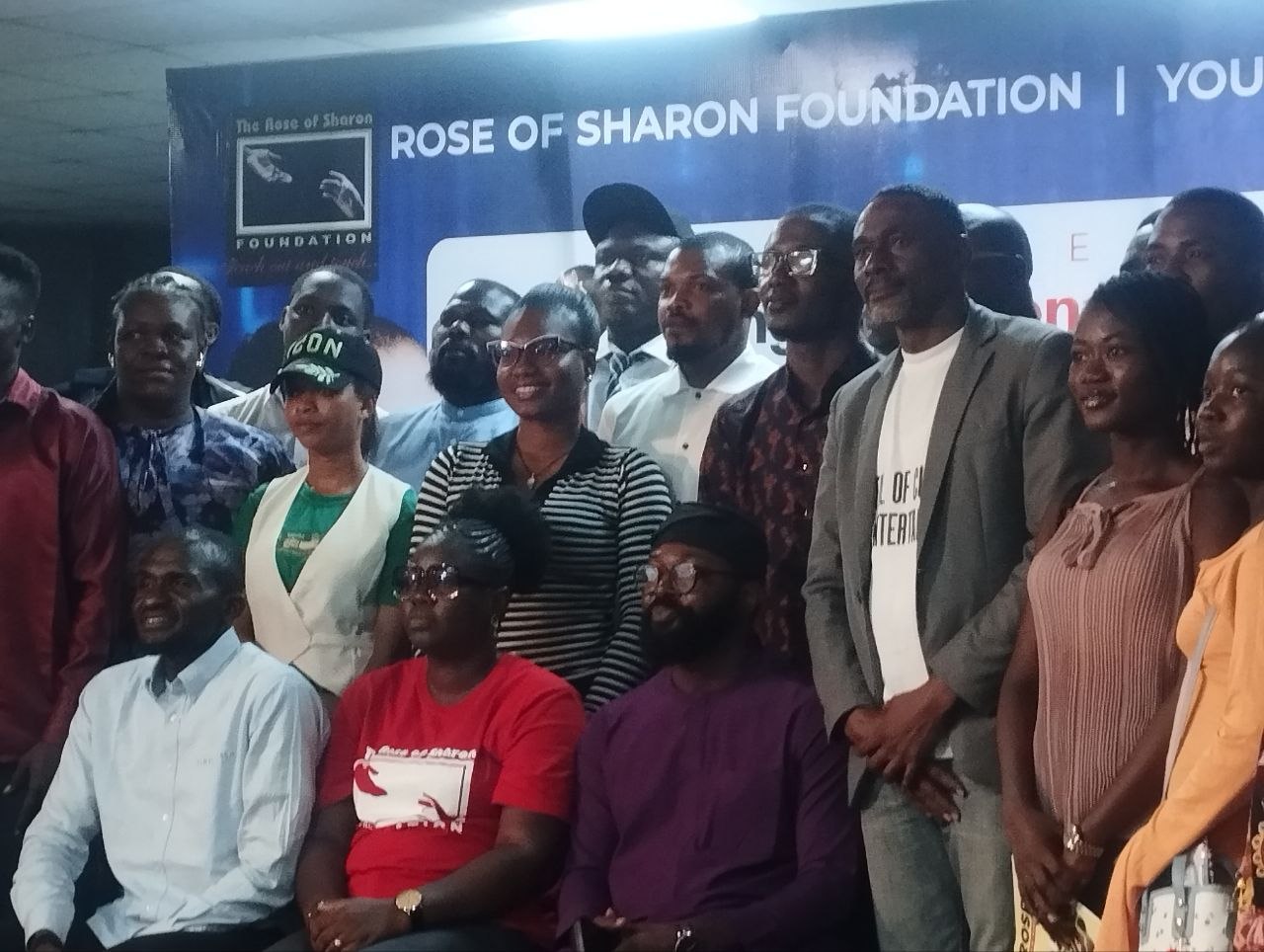
Speaking at the programme, Digital Management Consultant, Babajide Arulogun, said the training was designed to move participants beyond using existing AI applications to developing digital products that solve identified problems.
We concentrated more on how they themselves can create tools that, instead of just referring to Claude, referring to Gemini, they can create their own tools that can actually be deployed commercially or even privately to ensure that their work processes are optimised and their socio-economic status is improved.
— Babajide Arulogun
Arulogun explained that participants were taught to identify and articulate problems, use AI to refine their ideas and develop product concepts that programmers could turn into functional solutions.
He said the approach differed from the first edition, held at Yaba College of Technology in April, which focused mainly on using commercially available AI tools for research, presentations and image creation.

He recommended Kimi, Claude and MANUS for research, while identifying Gemini, DeepSeek and ChatGPT as other generative AI options.
Arulogun disclosed that he and his team had developed at least three chatbots, some of which were undergoing testing. One, he said, could hold conversations in Yoruba, Hausa, Hebrew and Nigerian Pidgin.
He attributed his progress to self-learning and his background in IT project management, noting that AI had made digital product development more accessible to people without extensive programming experience.
However, he cautioned young innovators against pursuing multiple projects simultaneously, warning that doing so could exhaust their resources. He also advised them to distinguish their products from competing solutions and seek feedback to sustain their motivation.
The fact that it is a locally built something can even be your leverage.
— Babajide Arulogun
On commercialising digital products, Arulogun urged developers to identify specific customers and address their needs before expanding into other markets.
Identify one thing, stay one course, one person, one problem, one organisation.
— Babajide Arulogun
He stressed that technical expertise must be complemented by business acumen to achieve commercial success.
The Coordinator of the Rose of Sharon Foundation, Oloruntosin Taiwo, said the programme was designed for undergraduates, fresh graduates and working youths.
She explained that although the initiative initially targeted the foundation’s beneficiaries, particularly children of widows and orphans, it had been extended to other young people in Lagos and beyond. Participation was free, but registration was required.
Taiwo said AI and the circular economy were selected because of their growing relevance to employment, entrepreneurship and sustainable development.
For the circular economy, it’s telling us that every waste in our environment can actually be converted into wealth. Even by collecting PET bottles, you can come into business.
She added that equipping young people with practical skills could improve their economic prospects and encourage greater social responsibility.
Taiwo cited Ogunlana Olusegun Adewale, Managing Director of Green Trash Environmental Sustainability Team, as an example of the impact of the foundation’s training.
According to her, Adewale attended the April edition, where he learnt how to incorporate AI into his work. She said the knowledge helped him present his project more effectively and secure a ₦120 million grant from the Lagos State Government within six months.
Speaking at the event, Adewale said the circular economy required a shift in attitudes towards waste, which could be reused or converted into useful products rather than discarded.
In the past, we discarded things without necessarily considering whether they could be reused or converted into something useful. Today, the circular economy encourages us to look at waste differently.
He urged participants to remain committed to their chosen careers and continually acquire new knowledge, regardless of their professional backgrounds.
Adewale also said his team had achieved more between April and October than in the preceding years, attributing the progress to improved knowledge and the application of AI.
We have accomplished more in these six months than we had managed to achieve in the preceding years of working on the project.
He urged aspiring entrepreneurs to begin by identifying problems they could solve, adding that understanding waste classification was essential to developing effective recycling and waste-management solutions.
According to him, waste can be classified by source, physical form and hazard level. Municipal waste includes materials generated in homes, schools and other community settings, while industrial waste includes chemical residues, contaminated wastewater, scrap metal and worn-out machinery.
He stressed that some industrial and healthcare waste required specialised handling because of potential environmental and health risks.
The foundation said the programme aimed to equip young people with practical skills to develop innovative products, build sustainable businesses and contribute to economic development.