Story
Loading the latest story
Please wait while the article is prepared.
Loading article content…
Loading article content…
Story
Please wait while the article is prepared.
Loading article content…
Loading article content…

Education
Stakeholders and advocates at the Rise Up Conference 2026 in Abuja have urged young African women to overcome limiting mindsets, develop innate capacities, and take active leadership roles. The gathering also highlighted collective community action as vital to addressing the crisis of out-of-school girls.
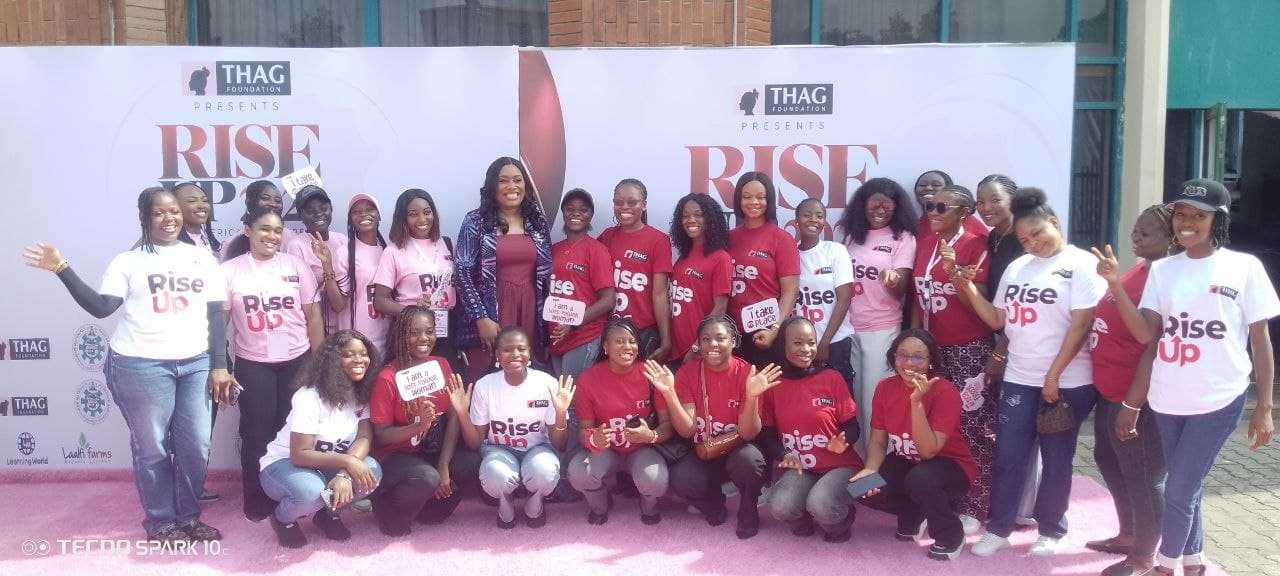
Women and stakeholders have called on young African girls to develop their skills, overcome limiting beliefs, and embrace leadership roles, emphasizing the necessity of sustained support for girls' education, entrepreneurship, and personal development. The call was made at the Rise Up Conference 2026, organized by The Healthy African Girl Foundation (THAG) in Abuja on Saturday under the theme, “The Soft Power Woman: Harness Your Strengths, Build Your Capacity and Take Your Place.” The gathering brought together students, young professionals, and advocates to discuss actionable pathways for girls to identify their capabilities and contribute to Africa’s development.
Speaking at the event, the founder and convener of The Healthy African Girl Foundation, Dr. Chinekwu Oreh, noted that the initiative was designed to inspire young women aged 16 to 35 to step forward in the continent's growth. She explained that her experience working with young women revealed that self-limiting mindsets frequently hinder them from identifying and realizing their full potential. Oreh stated that becoming a soft-power woman entails recognizing and cultivating innate talents and capacities rather than passively waiting for opportunities to be presented.
Oreh also emphasized the need for collective action to tackle the issue of out-of-school girls across Nigeria, asserting that the burden cannot be left to the government alone. She highlighted the role of community leaders and grassroots organizations in shifting social attitudes toward female education and boosting maternal human capital, noting that THAG utilizes peer interventions, volunteers, and campus ambassadors to spread the message.
Together, everybody achieves more.
— Dr. Chinekwu Oreh, Founder and Convener, The Healthy African Girl Foundation
Participants at the conference shared how the insights from established women leaders helped reshape their perspectives on leadership and ambition. Chikwendu Afunnaya, the Head Girl of Chrisland High School, Apo, Abuja, explained that the discussions motivated her to persevere and maintain focus amid obstacles. Reflecting on her school leadership experience, Afunnaya urged her peers to acknowledge their personal strengths and remain optimistic, noting that difficulties should never be equated with impossibility.
Echoing similar sentiments, Eka Towumi of Nigerian Tulip International Colleges (NTIC) highlighted the importance of taking initiative rather than waiting for ideal circumstances. Towumi advised aspiring young entrepreneurs to formulate well-defined plans and thoroughly understand their target ventures before seeking financial backing, pointing out that taking the first step provides essential clarity and momentum.
Another student participant, Achimugu Sharon Queen of Notre Dame Girls Academy, Kuje, Abuja, stressed that girls must translate their ambitions into concrete action without viewing requests for assistance as weakness. Addressing the plight of out-of-school children, Queen urged local communities to actively support vulnerable girls instead of relying exclusively on state authorities. She stated her ambition to become a lawyer and entrepreneur to defend girls’ rights and generate opportunities for others.
Other speakers at the event underscored the role of modern digital tools and multi-sector collaboration in advancing women's initiatives. Susanna Oguaba, Programme Officer Intern at THAG, nutritionist, and founder of the Diet 24/7 Initiative, urged young women to leverage emerging technologies, including artificial intelligence and social media, to articulate ideas and create economic value despite systemic constraints. Oguaba appealed to the government to bolster organizations empowering young women through mentorship, funding, and structured access to platforms.
Addressing educational gaps, the founder of Loom Craft Chocolate, Uzomaka Igweike, observed that standard school curricula often leave young people without practical guidance on entrepreneurship, resourcefulness, and self-confidence. She stressed that meaningful empowerment requires deliberate efforts to build character, competence, and access to opportunities, rather than relying on surface-level encouragement.
Igweike further stated that entrenched cultural barriers affecting girls' education demand continuous grassroots dialogue and community engagement. She noted that public policies alone cannot resolve these underlying issues without targeted initiatives that help families and communities appreciate the long-term benefits of educating girls and nurturing their leadership capacity.