Story
Loading the latest story
Please wait while the article is prepared.
Loading article content…
Loading article content…
Story
Please wait while the article is prepared.
Loading article content…
Loading article content…

Metro
A Mombasa High Court has convicted Kenyan pastor Paul Nthenge Mackenzie and dozens of co-accused of murdering 190 children through enforced starvation in Shakahola Forest. The landmark ruling brings a measure of legal accountability to one of the continent's most horrific religious extremism tragedies ahead of sentencing on November 6.
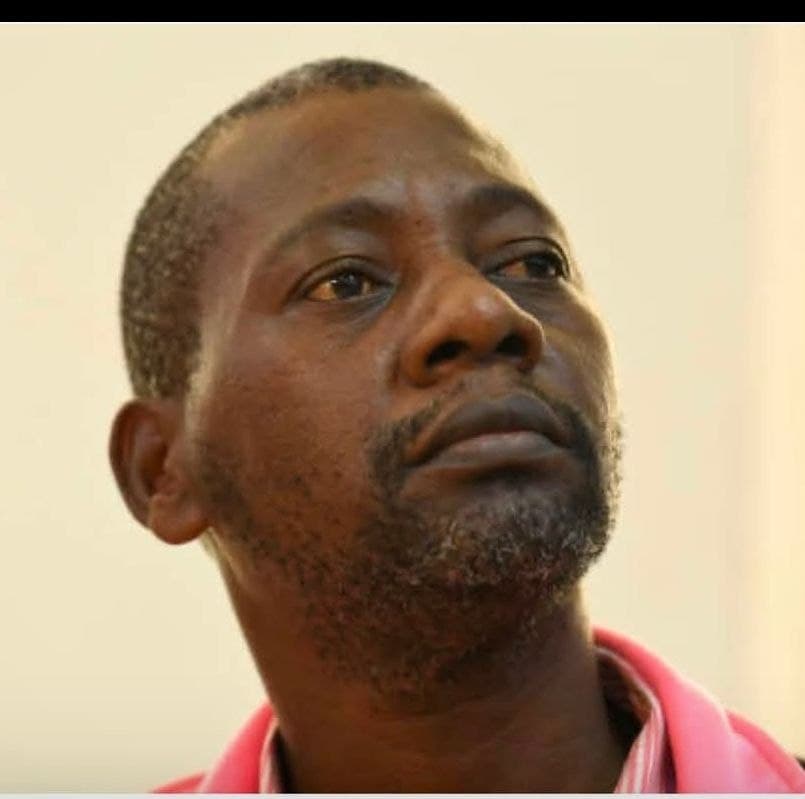
Three years after the discovery of hundreds of bodies buried in shallow graves across Shakahola Forest in Kilifi County, Kenya, the pursuit of justice reached a major milestone on Monday, October 19, 2026. Mombasa High Court judge, Justice Diana Kavedza Mochache, convicted pastor Paul Nthenge Mackenzie of murdering 190 children and one adult. Mackenzie, the founder of Good News International Church in Malindi, is scheduled to receive his sentence on November 6.
The conviction represents a decisive moment in one of Kenya's most harrowing cases of religious extremism, where the promise of spiritual salvation was systematically weaponised to compel congregants into fatal starvation. Alongside Mackenzie, between 29 and 30 co-accused persons, including his wife, were also convicted of murder for their roles in orchestrating the mass fatalities.
organised system in which religious teachings and an established hierarchy were used to direct and enforce deadly fasting
— Justice Diana Kavedza Mochache, Judge, Mombasa High Court
The court determined that the deadly fast was implemented sequentially and deliberately, placing the most helpless followers at the very beginning of the lethal process.
Mackenzie, who is in his early 50s, established the Good News International Church in Malindi in 2003 and amplified his reach by preaching on Times TV. Presenting himself as a guide for spiritual seekers, he gradually radicalised his doctrine, eventually declaring himself "Jesus Mouthpiece." He taught followers that the world was approaching its imminent end, condemning formal schooling and modern healthcare as inherently evil while insisting that starvation was the sole path to heaven.
In 2019, Mackenzie relocated his followers to an isolated 325-hectare ranch deep within Shakahola Forest. Cut off from mainstream society, the settlement functioned under a rigid and fatal command structure. Instructions dictated that children were to fast first, followed by young people, women, and men, while the church leadership was slated to die last.
This deliberate arrangement exposed the community's most vulnerable members to immediate peril, as young children had neither the capacity to comprehend the doctrine nor the autonomy to escape it. To maintain compliance, guards were stationed across the perimeter to stop escape attempts, allegedly threatening that anyone resisting the decree would be "forced to go to heaven through kicks and blows."
The magnitude of the atrocity surfaced in early 2023 following a police tip-off regarding suspicious deaths within the forest boundaries. In April 2023, Kenyan authorities initiated extensive exhumation operations across scattered shallow graves, transforming an initial investigation into a massive multi-agency forensic recovery mission.
To date, 429 bodies have been recovered from the forest, but severe decomposition has severely hindered forensic progress, leaving only 26 victims formally identified. The vast number of unidentified remains prolongs the agony of grieving families who remain trapped between the search for missing relatives and the pursuit of closure.
Post-mortem examinations conducted on the recovered remains confirmed that starvation was the leading cause of death. However, pathologists also documented cases of asphyxia, blunt-force trauma, and strangulation, underscoring evidence of physical violence deployed against victims who attempted to resist the deadly fast or flee the camp. While the court has ruled on the deaths of the 190 children and one adult, inquiries into the remaining bodies are unresolved.
Throughout the trial, Mackenzie maintained his innocence, claiming that he never coerced any follower into abstaining from food. That defense was entirely rejected by the High Court's findings, which established criminal culpability for the deaths of the 190 children and one adult under his religious supervision.
The convicted cleric continues to face several separate legal proceedings connected to the forest deaths, including charges related to terrorism, radicalisation, and the unlawful denial of education to children. The upcoming sentencing on November 6 will conclude this murder trial, even as related judicial processes move forward.
Beyond the courtroom, the Shakahola tragedy leaves profound questions regarding state oversight, the monitoring of insular religious movements, and the protection of vulnerable minors from catastrophic exploitation. For the families of victims and investigators still working to identify hundreds of recovered bodies, the quest for complete truth and accountability remains far from over.