Story
Loading the latest story
Please wait while the article is prepared.
Loading article content…
Loading article content…
Story
Please wait while the article is prepared.
Loading article content…
Loading article content…

Health
NAFDAC operatives have raided an illegal facility producing and repackaging counterfeit alcoholic and energy drinks at the Lagos Trade Fair Complex, arresting two suspects amid heightened festive season enforcement.
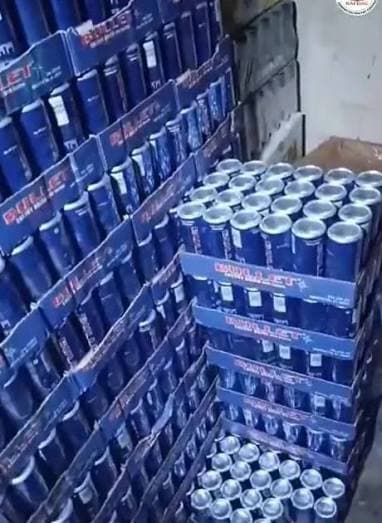
Behind the bustling commercial activities at Zamfara Plaza, BBA Trade Fair Complex, along the Badagry Expressway in Ojo, Lagos, stood a two-storey building that investigators say housed a suspected counterfeit drinks production facility.
To the unsuspecting consumer, a bottle of alcoholic or energy drink bearing the familiar label of an established brand may inspire confidence. Its packaging may look convincing, its colour familiar and its seal seemingly reassuring. Yet, what lies inside may be an entirely different story.
For consumers who buy drinks from shops, bars, roadside outlets and market stalls, the possibility that a product could have been repackaged under the identity of a trusted brand raises an unsettling question: how can they be certain that what they are drinking is safe?
That question came into sharper focus when operatives of the National Agency for Food and Drug Administration and Control (NAFDAC) raided the suspected facility, arrested two men and recovered equipment and materials allegedly used to produce or repackage counterfeit alcoholic and energy drinks.
The suspects, identified as Chibuzor Okafor and William John, were arrested during the enforcement operation, which followed what the agency described as credible intelligence and surveillance on suspected counterfeiters operating within the Trade Fair International Market.
Inside the building, investigators reportedly discovered drums, filters, packaging materials, a heating device and other equipment suspected to have been used in the illegal operation.
For the enforcement team, the discovery was more than another seizure. It was a reminder of the potential dangers lurking behind products that consumers may purchase without suspecting that their contents or origins could be questionable.
Speaking during the operation, Assistant Director of the Investigation and Enforcement Directorate of NAFDAC, Mr Kunle Ojo, expressed concern over what officials encountered at the premises.
Gentlemen of the press, as you can see today, when we came, we caught some red-handed producing all kinds of alcoholic drinks.
— Kunle Ojo, Assistant Director, NAFDAC Investigation and Enforcement Directorate
What we have discovered today is a lot, and it's mind-boggling. We are here to protect the lives of many Nigerians.
— Kunle Ojo, Assistant Director, NAFDAC Investigation and Enforcement Directorate
His words captured the central concern surrounding the suspected operation: when beverages are produced or repackaged outside regulated systems, consumers may have no reliable way of establishing what they are consuming.
Perhaps the most revealing moment during the raid came when one of the arrested suspects, Chibuzor Okafor, offered his account of the activities at the premises.
Identifying himself as a drinks dealer in the market, Okafor said he changed the bottles in which drinks were contained, explaining that the original drink had allegedly been damaged.
I deal on drinks. I change the bottle of the drink. It's not that the bottle is not good. It's the drink in there, because the other one is already damaged. So that's why we are putting it to the next bottle.
— Chibuzor Okafor, speaking to Vanguard at the scene
His explanation raises questions about the source, handling and safety of the drinks allegedly being transferred into other bottles, as well as whether the products were subjected to appropriate quality checks.
Although the suspect's account does not, by itself, establish the composition or safety of the recovered drinks, the circumstances of the operation underline the need for consumers to be cautious about beverages whose origins and handling cannot be verified.
For the average Nigerian, buying a drink is an everyday decision, often made quickly and on the strength of a familiar label. But when packaging can potentially conceal an uncertain history, the distinction between appearance and authenticity becomes a matter of public health.
A counterfeit or adulterated beverage may expose consumers to substances or contaminants that have not been properly assessed. The precise risks depend on the ingredients, production methods and conditions under which the product was handled. Without appropriate testing, neither the seller nor the consumer can reliably determine its safety by appearance alone.
With demand for alcoholic and other beverages typically rising during festive periods, NAFDAC said it had intensified enforcement activities to prevent suspected counterfeit products from circulating in the market.
Ojo warned that the illegal production and distribution of drinks could have serious consequences for consumers, appealing to those involved to abandon the practice.
You are killing Nigerians in order to make money, which is not good.
— Kunle Ojo, Assistant Director, NAFDAC Investigation and Enforcement Directorate
The agency's concern extends beyond the individuals allegedly operating the facility. Investigators are expected to establish where the products and raw materials originated, who supplied them and whether other people were involved in financing, organising or distributing the suspected counterfeit drinks.
Ojo also questioned the sources of the materials and the people behind the operation.
Where are they getting the products from? Where are they getting their raw materials? Who is employing them to do this kind of dangerous activity?
— Kunle Ojo, Assistant Director, NAFDAC Investigation and Enforcement Directorate
These questions are crucial because the discovery of a suspected production site does not necessarily reveal the full extent of the supply chain. Establishing the sources of the materials, the intended markets and the identities of any other participants could help investigators determine whether the operation was isolated or connected to a wider network.
Ojo said the recovered products and materials would be evacuated to the agency's warehouse for further action, including destruction in accordance with applicable procedures.
Those people that we have arrested today will be dealt with administratively and definitely will face the law.
— Kunle Ojo, Assistant Director, NAFDAC Investigation and Enforcement Directorate
The suspects' arrests and the agency's allegations, however, are not proof of guilt. Their culpability and any applicable offences remain matters for investigation and the appropriate legal process.
The operation also provided an opportunity for NAFDAC officials to address concerns about the agency's response to the circulation of counterfeit and unregistered products.
For some Nigerians, the recurring discovery of questionable products in markets raises concerns about whether enforcement efforts are sufficient to deter offenders. The agency, however, insists that its work continues beyond the operations that attract media attention.
Mrs Christiana Obiazikwor, Deputy Director of NAFDAC Public Relations, said the agency routinely carried out surveillance, seizures, arrests and destruction of offending products, even when such activities were not publicly announced.
NAFDAC is still at work. We are on the streets. We are in the markets. We are everywhere.
— Christiana Obiazikwor, Deputy Director, NAFDAC Public Relations
Obiazikwor explained that enforcement operations were often conducted without publicity to avoid alerting suspected offenders or provoking confrontations that could compromise the exercise.
Most of the things they do, we don't publicise them so that we don't raise alarm.
— Christiana Obiazikwor, Deputy Director, NAFDAC Public Relations
She added that the decision to invite journalists to witness the latest operation was intended to demonstrate the agency's activities and reassure the public that it remained committed to safeguarding consumers.
But beyond reassuring Nigerians, the scale of the challenge means enforcement must be accompanied by effective investigations, monitoring of distribution channels and sustained public awareness.
Removing suspected counterfeit products from one location may prevent those particular items from reaching consumers. Identifying their suppliers, distributors and intended destinations could help investigators establish whether similar products remain in circulation elsewhere.
Assistant Director and Head of Public Relations, Investigation and Enforcement, Mrs Victoria Jennifer Akudu, said the raid formed part of the agency's routine efforts to uncover illegal manufacturing activities.
Every day, our people are in the field. Our enforcement department, they are on the field trying to uncover this. And they do a lot.
— Victoria Jennifer Akudu, Assistant Director and Head of Public Relations, Investigation and Enforcement
She described the operation as part of the enforcement directorate's continuing activities.
This is just a routine activity of our enforcement directorate.
— Victoria Jennifer Akudu, Assistant Director and Head of Public Relations, Investigation and Enforcement
Akudu further disclosed that the suspected operators had allegedly moved from an earlier location following enforcement action, prompting officials to continue tracking their activities.
We have confiscated and sealed off the place. They moved to another place. This time around, we passed through the back door. And that is how we are able to get them.
— Victoria Jennifer Akudu, Assistant Director and Head of Public Relations, Investigation and Enforcement
Her account suggests that tracking suspected offenders may require sustained surveillance rather than relying solely on inspections of known premises.
It also underscores the importance of investigating whether operators who relocate after enforcement action continue their activities elsewhere and how their products may enter the market.
For consumers, the central issue remains whether suspected counterfeit products can be identified and intercepted before they reach shop shelves and drinking establishments.
As NAFDAC continues its enforcement activities, officials say members of the public can help by reporting credible information about suspected counterfeit production and distribution.
Obiazikwor urged Nigerians to report concerns directly to the agency rather than rely on social media posts that may spread unverified allegations or create unnecessary panic.
There's no point going to social media to create fear. Report to NAFDAC and we'll do the needful.
— Christiana Obiazikwor, Deputy Director, NAFDAC Public Relations
She also assured potential informants that their identities would be protected.
Ojo similarly encouraged Nigerians to speak up when they encounter suspicious activities.
If you see something, say something.
— Kunle Ojo, Assistant Director, NAFDAC Investigation and Enforcement Directorate
The appeal places some responsibility on consumers and community members, who may notice unusual production activities, suspicious repackaging or the sale of drinks whose origins cannot be established.
However, reporting should be based on credible observations rather than speculation. A product's appearance or an unfamiliar seller alone does not establish that it is counterfeit. Where concerns arise, the appropriate course is to provide relevant information to the authorities for verification.
Akudu, meanwhile, urged Nigerians not to panic, assuring them that the agency remained committed to carrying out its statutory responsibilities.
I will ask Nigerians not to fear. We are alert and we are alive. We are doing our statutory function the way it should be.
— Victoria Jennifer Akudu, Assistant Director and Head of Public Relations, Investigation and Enforcement
The discovery at Zamfara Plaza brings the conversation about counterfeit drinks back to an issue that affects households, businesses and public health: the need for confidence in the products people consume.
For consumers, the immediate lesson is to purchase beverages from reputable outlets, check packaging and product information, and avoid drinks whose seals appear tampered with or whose origins cannot be verified. Suspicious products should be reported to NAFDAC rather than consumed.
Yet, individual caution cannot replace effective regulation. Manufacturers, distributors, retailers and enforcement agencies all have roles to play in ensuring that products entering the market meet applicable safety and quality requirements.
For NAFDAC, the next steps will include investigating the recovered materials, tracing the products' origins and establishing the extent of the alleged operation. The outcome of those investigations will be important in determining whether further enforcement action is necessary.
For the two arrested suspects, the legal process will determine their responsibility for the activities uncovered at the premises.
And for the public, the raid serves as a reminder that a familiar label is not, on its own, a guarantee of authenticity.
In a market where consumers often make quick purchasing decisions, the difference between a genuine product and a suspected counterfeit may not be immediately visible. That is why vigilance, credible reporting and effective enforcement matter.
As the festive season approaches, the message from NAFDAC is clear: protecting consumers requires more than identifying suspicious products after they have been produced. It requires tracing their sources, disrupting their distribution and ensuring that those responsible are held accountable through due process.
Ultimately, the success of the operation will not be measured only by the materials recovered or the arrests made, but also by whether the investigation helps prevent unsafe or counterfeit beverages from reaching the people who may unknowingly consume them.