Story
Loading the latest story
Please wait while the article is prepared.
Loading article content…
Loading article content…
Story
Please wait while the article is prepared.
Loading article content…
Loading article content…

Business
The Pharmaceutical Manufacturers Group of Nigeria is urging the Federal Government to reduce energy costs and extend policy frameworks to achieve a 70% local medicine production target.
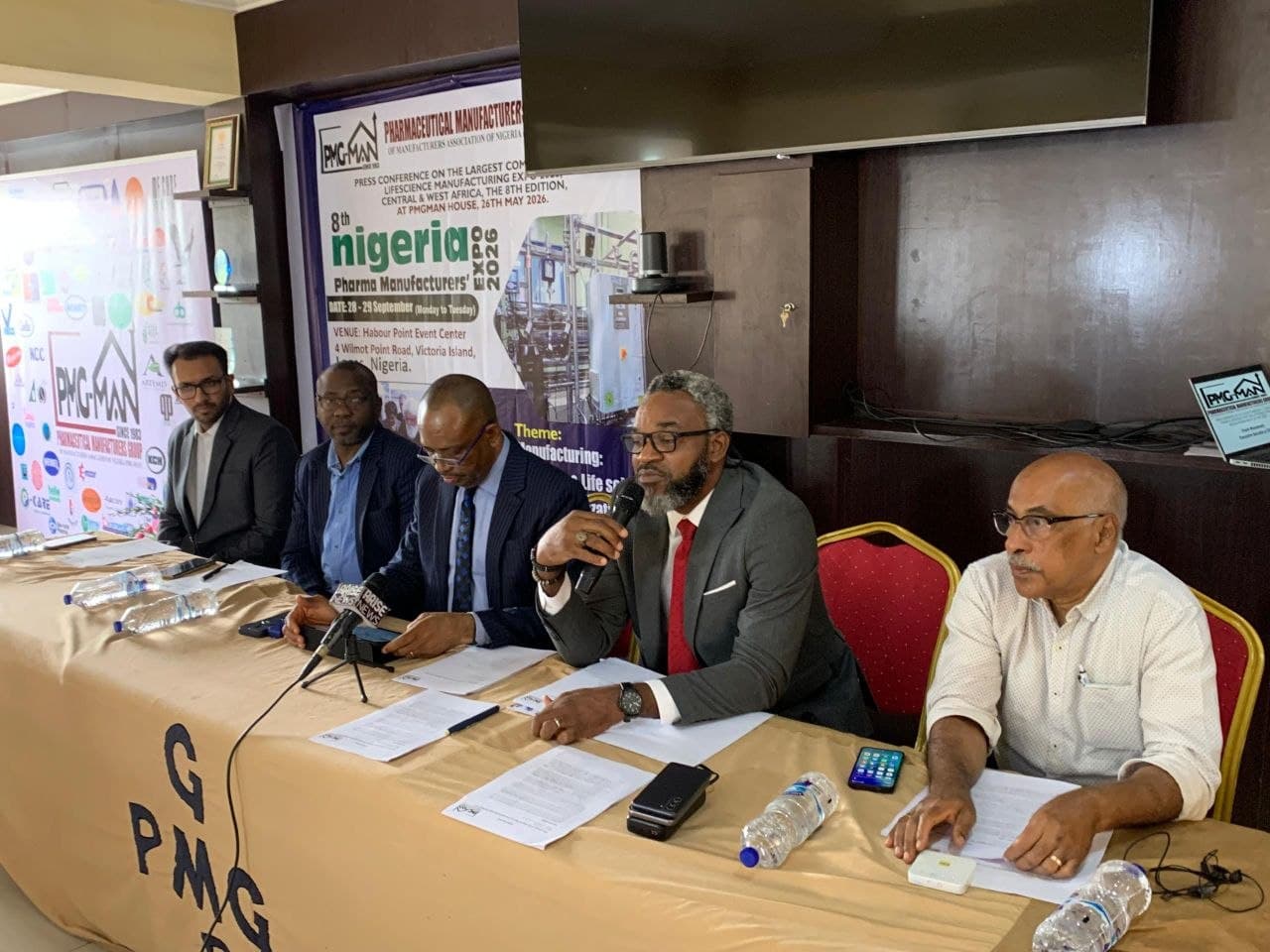
The Pharmaceutical Manufacturers Group of the Manufacturers Association of Nigeria (PMG-MAN) has called on the Federal Government to urgently reduce the cost of energy and strengthen policies supporting the local production of Active Pharmaceutical Ingredients (APIs). The group emphasized that these essential inputs are necessary to enable Nigeria to achieve total medicine security and reduce its heavy reliance on imported healthcare products.
High energy costs, delayed clearance of pharmaceutical inputs, and policy uncertainty were identified as major factors undermining the competitiveness of local drug manufacturers. PMG-MAN noted that these challenges discourage the level of investment required to make Nigeria self-sufficient. The group is currently targeting 70 per cent local production of medicines, a goal that requires a competitive and investment-friendly pharmaceutical ecosystem backed by forward-looking government policies.
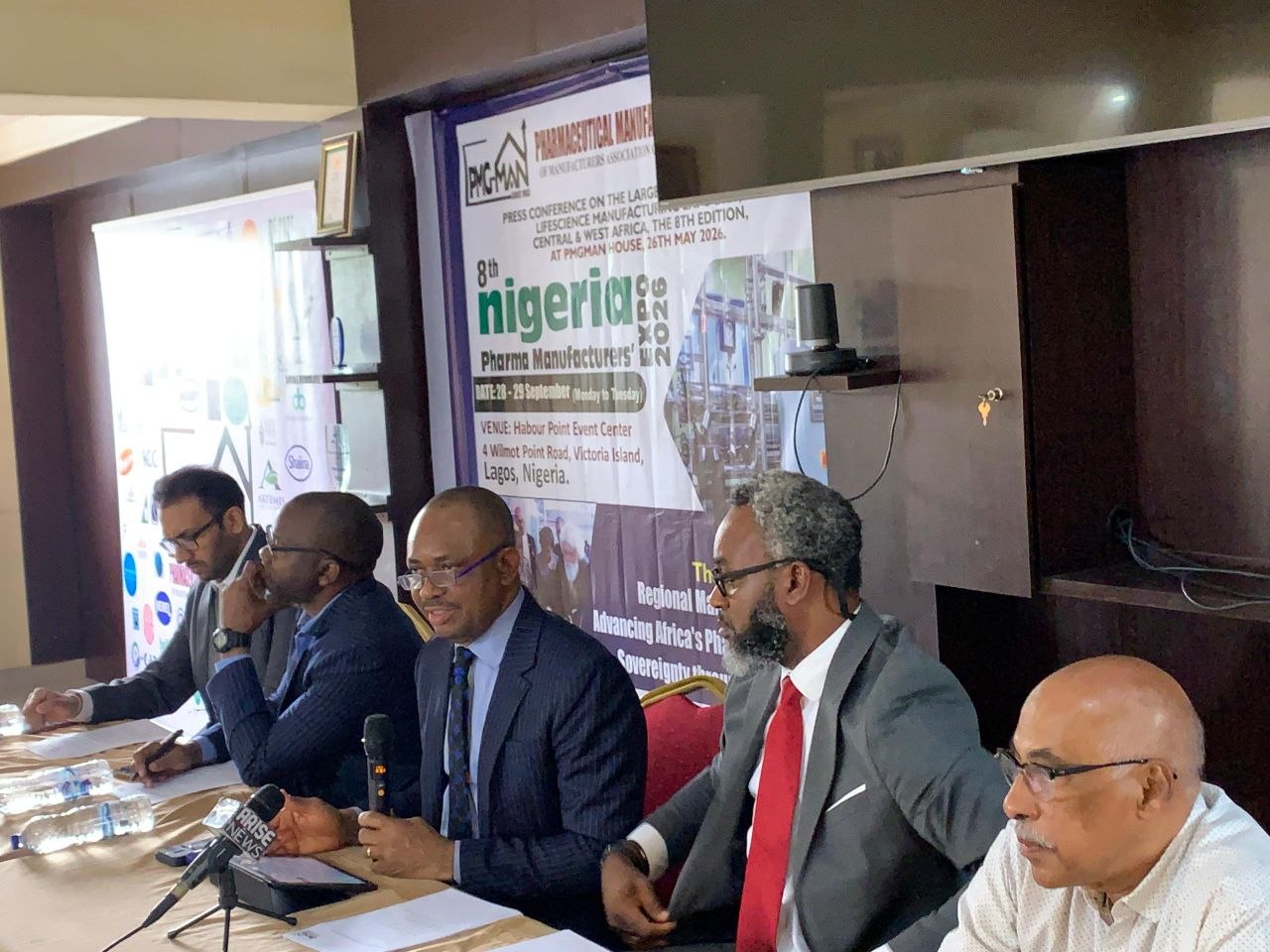
Our ambition is to achieve 70 percent local drug production. This is critical to ensuring medicine security and building a resilient pharmaceutical manufacturing industry in Nigeria.
— Dr. Patrick Ajah, Chairman of the Exhibition Planning Committee, PMG-MAN
Despite the current economic hurdles, the pharmaceutical manufacturing sector has expanded significantly from 20 pioneer members in 1983 to more than 200 manufacturing companies today. This growth reflects the industry’s long-term commitment to reducing Nigeria’s dependence on imported medicines. The upcoming 8th Nigeria Pharma Manufacturers’ Expo (NPME 2026), themed “Regional Manufacturing: Advancing Africa’s Pharma and Life Science Sovereignty through Localisation,” will serve as a platform for stakeholders to address these issues.
Scheduled for September 28 and 29, 2026, at Harbour Point, Victoria Island, Lagos, the expo will gather over 200 exhibitors and nearly 10,000 professionals. The event is designed to facilitate partnerships among manufacturers, investors, technology providers, and regulators. Key focus areas include technology transfer, regulatory harmonisation, market access, and cross-border market integration to strengthen Nigeria’s manufacturing capacity.
Data from the National Agency for Food and Drug Administration and Control (NAFDAC) indicates a paradigm shift, with imports of finished pharmaceuticals declining from 4.03 billion units to 1.13 billion units as of 2025. While this decline shows that local manufacturers are increasingly filling the supply gap, stakeholders warn that these gains could be reversed if critical constraints affecting production costs are not urgently addressed.
One of the most significant threats to the industry is the escalating cost of power. Executive Secretary of PMG-MAN, Pharm. Frank Muonemeh, revealed that pharmaceutical companies are currently spending more than 40 per cent of their revenue on electricity and alternative power generation. This is in stark contrast to international competitors in countries like China and India, where energy costs typically account for less than 10 per cent of revenue.
Energy costs constitute one of the biggest threats to the survival and competitiveness of pharmaceutical manufacturers in Nigeria. We urge the Federal Government to introduce targeted interventions, including dedicated industrial energy tariffs, to reduce the cost burden on manufacturers.
— Pharm. Frank Muonemeh, Executive Secretary and CEO, PMG-MAN
To ensure long-term stability, the group is appealing to President Bola Ahmed Tinubu to extend the Presidential Executive Order supporting the pharmaceutical sector from its current two-year cycle to a five-year framework. Manufacturers argue that a longer policy horizon is essential to provide the certainty required for investors to commit substantial capital toward expanding production capacity and improving technology. Consistent policies will allow the industry to consolidate gains and position Nigeria as a major pharmaceutical manufacturing hub in Africa.