Story
Loading the latest story
Please wait while the article is prepared.
Loading article content…
Loading article content…
Story
Please wait while the article is prepared.
Loading article content…
Loading article content…

Health
Healthcare stakeholders reveal that over 130 million Nigerians lack health insurance, leaving the majority of the population vulnerable to catastrophic medical expenses and financial ruin.
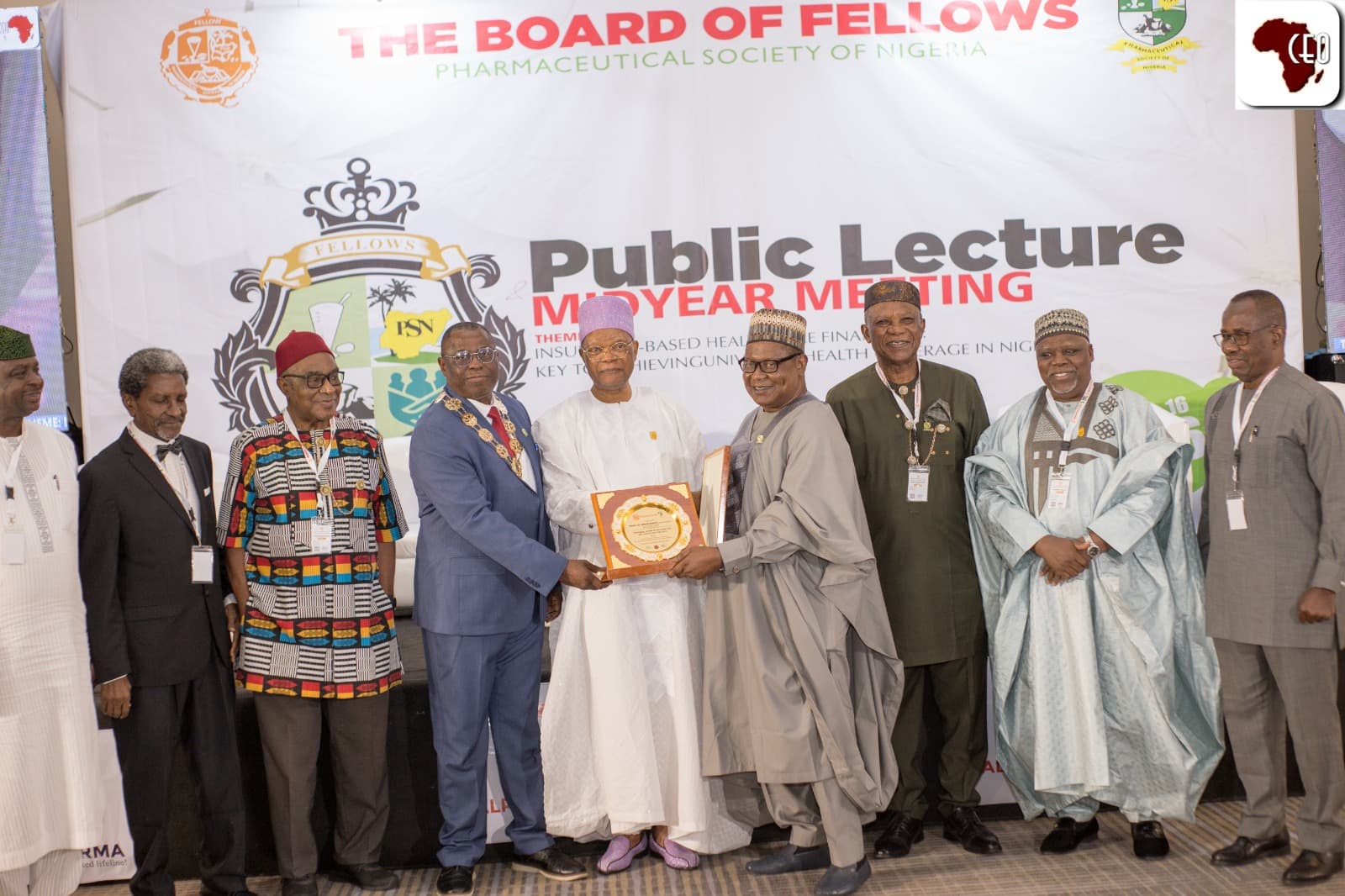
Stakeholders in the Nigerian healthcare sector have raised an alarm over the country's dire insurance gap, revealing that more than 130 million Nigerians currently lack any form of health insurance. This disclosure came during the 2026 Public Lecture and Mid-Year Meeting of the Board of Fellows of the Pharmaceutical Society of Nigeria (BOF-PSN) in Lagos, where leaders warned that millions of citizens remain a single illness away from financial ruin.
The meeting, themed "Insurance-Based Healthcare Financing: Key to Achieving Universal Health Coverage in Nigeria," highlighted that only five to eight per cent of the population is currently covered. This disparity leaves traders, artisans, and transport workers in the informal sector particularly vulnerable, often forcing families to deplete their life savings to manage medical emergencies.
Affordable and comprehensive health insurance must no longer be treated as a privilege, but as a fundamental pillar of national development and social protection.
— Pharm. Uchenna Uzoma Apakama, Chairman, Board of Fellows of the Pharmaceutical Society of Nigeria (BOF-PSN)
Despite over two decades of health insurance initiatives, Nigeria’s Universal Health Coverage (UHC) index remains stagnant at approximately 40, with more than 70 per cent of healthcare expenditure still paid directly by patients. Former Minister of Health, Prince Julius Adelusi-Adeluyi, noted that implementation has consistently lagged behind policy formulation. He challenged Nigerians to prioritize their health insurance with the same urgency they apply to insuring material assets like cars and houses.
The Pharmaceutical Society of Nigeria (PSN) and the Nigeria Academy of Pharmacy also emphasized the need to integrate community pharmacists into the national health insurance architecture. Given that community pharmacies are often the most accessible healthcare points, stakeholders argued they should serve as frontline providers to improve medication management and patient outcomes across the country.
Why many Nigerians were willing to insure their material assets but neglected health insurance until serious illness left them financially devastated.
— Prince Julius Adelusi-Adeluyi, Former Minister of Health, Nigeria
To address the coverage gap, the National Health Insurance Authority (NHIA) is focusing on digital innovation and the "Renewed Hope Agenda" to eliminate financial barriers. Managing Director of Hygeia HMO, John Iwuajoku, advocated for integrating the National Identification Number (NIN) and Bank Verification Number (BVN) into enrolment processes to enhance data management and nationwide reach.
A significant development at the event was the unveiling of the U-Health GIFSHIP by Ultimate Health HMO, a programme specifically designed for the informal sector. While over 11 million Nigerians are covered under the Federal Civil Service Health Insurance Programme, the vast majority of small business owners and transport operators remain outside the system despite the 2022 NHIA Act making insurance mandatory for all citizens.
Our goal is not simply to sell health insurance but to make quality healthcare more affordable, more accessible and more equitable for every Nigerian.
— Dr. Lekan Ewenla, Managing Director, Ultimate Health HMO
The assembly concluded that achieving Universal Health Coverage requires coordinated action between the government, private organizations, and professional bodies. Pharm. Femi Adeoye, representing the NHIA, noted that efforts are being made to improve healthcare quality through better provider accreditation and workforce development.
Additional support was pledged by representatives from the National Drug Law Enforcement Agency (NDLEA), the Nigerian Institution of Estate Surveyors and Valuers (NIESV), and the Pharmacy Council of Nigeria (PCN). The stakeholders stressed that Nigeria must transition from a system dominated by out-of-pocket payments to a sustainable insurance-driven model to protect citizens from medical poverty.