Business
Nigeria moves to build Africa’s pharma hub, targets 70% local production
Strategic Push for Pharmaceutical Sovereignty
Nigeria is targeting 70 per cent local production of medicines as the Federal Government and pharmaceutical manufacturers intensify efforts to reduce dependence on imported drugs and strengthen the country’s health security. This target will take centre stage at the 8th Nigeria Pharma Manufacturers Expo (NPME 2026), where senior government officials and industry stakeholders will gather to discuss the future of the sector.
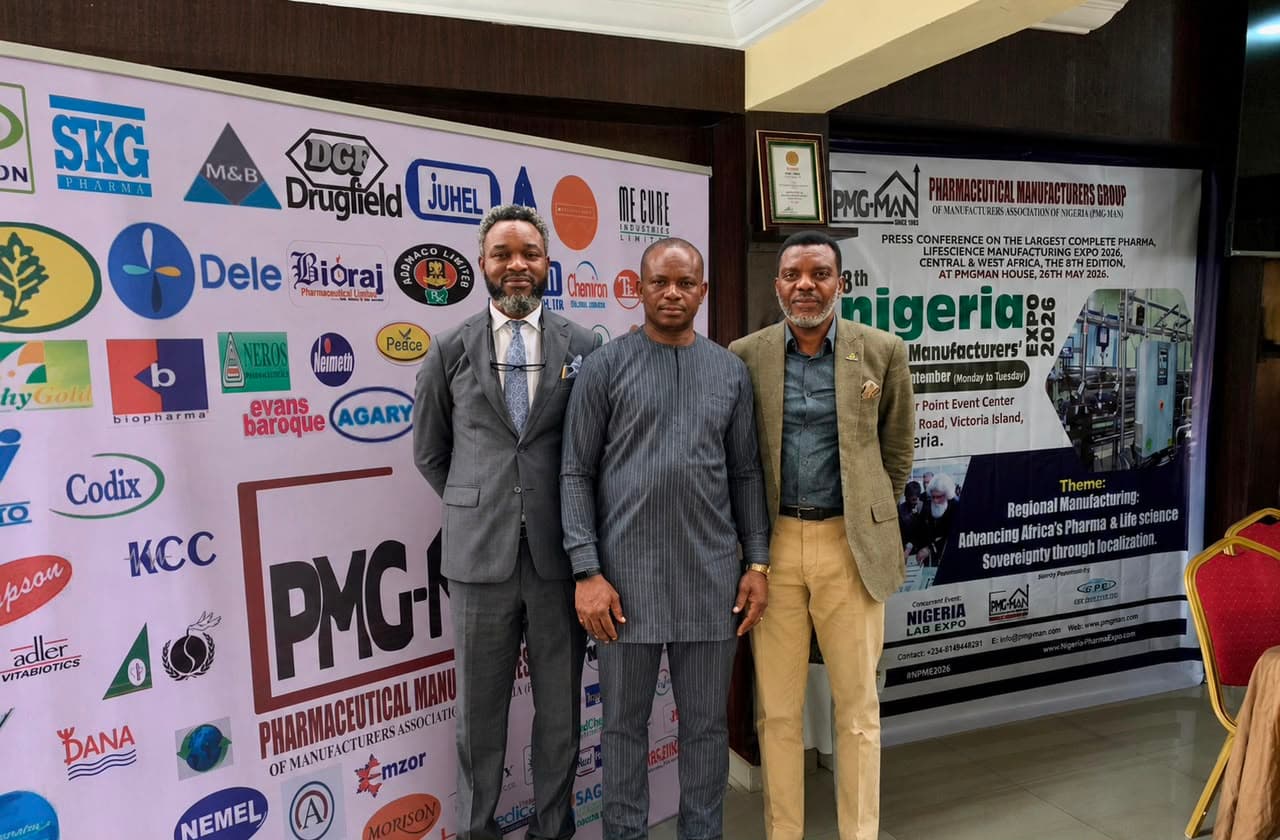
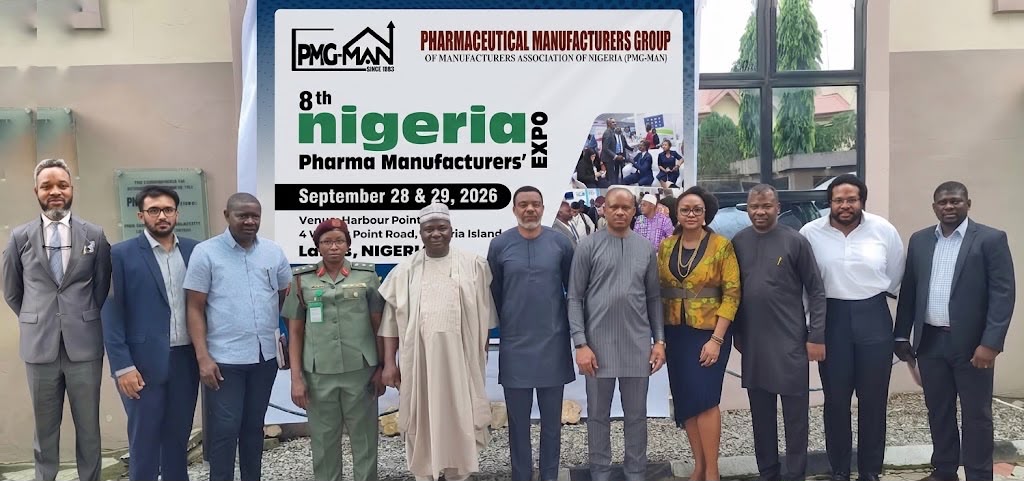
The two-day expo, scheduled for September 28 and 29, 2026, at Harbour Point, Victoria Island, Lagos, operates under the theme: “Regional Manufacturing: Advancing Africa’s Pharma & Lifescience Sovereignty through Localization.” The event is organized by the Pharmaceutical Manufacturers Group of the Manufacturers Association of Nigeria (PMG-MAN) in partnership with GPE Expo Pvt. Ltd.
Speaking at a media briefing in Lagos, Pharm. Patrick Ajah, Chairman of the NPME Committee, emphasized that the sector is actively working toward the 70 per cent production milestone. The expo is designed to attract foreign direct investment, facilitate technical partnerships, and promote the local sourcing of raw materials to strengthen domestic capacity.
Alignment with National Healthcare Goals
The initiative aligns with the Presidential Initiative for Unlocking the Healthcare Value Chain (PVAC), a program seeking to reposition Nigeria’s healthcare sector by shifting from import heavy-dependence toward commercialization and technology transfer. The event is expected to host more than 200 exhibiting companies and nearly 10,000 healthcare professionals and regulatory experts.
The outcome of the event would contribute to the development of a policy framework capable of supporting reforms in pharmaceutical regulation, financing, manufacturing and supply chains across Nigeria and the wider African continent.
— Pharm. Patrick Ajah, Chairman of the NPME Committee, Pharmaceutical Manufacturers Group of the Manufacturers Association of Nigeria (PMG-MAN)
Dignitaries expected at the expo include the Coordinating Minister of Health and Social Welfare, Prof. Muhammad Ali Pate; the Minister of Industry, Trade and Investment, Dr. Jumoke Oduwole; and the Director-General of NAFDAC, Prof. Moji Christianah Adeyeye, among other high-ranking officials.
Declining Import Trends and Regulatory Growth
Recent data suggests a significant shift in the pharmaceutical landscape. According to Pharm. Frank Muonemeh, Executive Secretary and CEO of PMG-MAN, NAFDAC records show that imports of finished pharmaceutical products declined from 4.03 billion units to 1.13 billion units as of 2025. This transition has brought the ratio of imported to locally produced essential medicines to approximately 50:50.
The development of a resilient domestic pharmaceutical manufacturing ecosystem should no longer be viewed solely as an economic objective but as an essential component of Nigeria’s public health security and national sovereignty.
— Pharm. Frank Muonemeh, Executive Secretary and CEO, Pharmaceutical Manufacturers Group of the Manufacturers Association of Nigeria (PMG-MAN)
Despite the progress, Muonemeh noted that the industry still faces critical vulnerabilities. Global health emergencies, geopolitical conflicts, and border closures continue to pose risks to national health security as long as the country remains partially dependent on international supply chains.
Addressing Infrastructure and Policy Barriers
Local manufacturers continue to grapple with high operational costs and infrastructure deficits. Currently, pharmaceutical companies spend more than 40 per cent of their income on electricity and alternative power generation. In contrast, manufacturers in global hubs like China and India reportedly spend less than 10 per cent on energy.
Industry leaders are calling for targeted government interventions, including: - Dedicated industrial energy tariffs for pharmaceutical plants. - Extension of the Presidential Executive Order from two years to five years to provide investment certainty. - Expansion of tax exemptions for active pharmaceutical ingredients (APIs) and specialized excipients.
Existing interventions, including the Presidential Executive Order, currently covered only about five per cent of the APIs and specialised excipients required by local manufacturers.
— Pharm. Olusola Akande, Executive Director, Drugfield Pharma Ltd
Stakeholders argue that these measures are essential to improving medicine affordability for Nigerians and ensuring that domestic manufacturers can compete effectively under the African Continental Free Trade Area framework.