Security
Lagos destroys 300 tons of illicit drugs, vows tougher war against traffickers
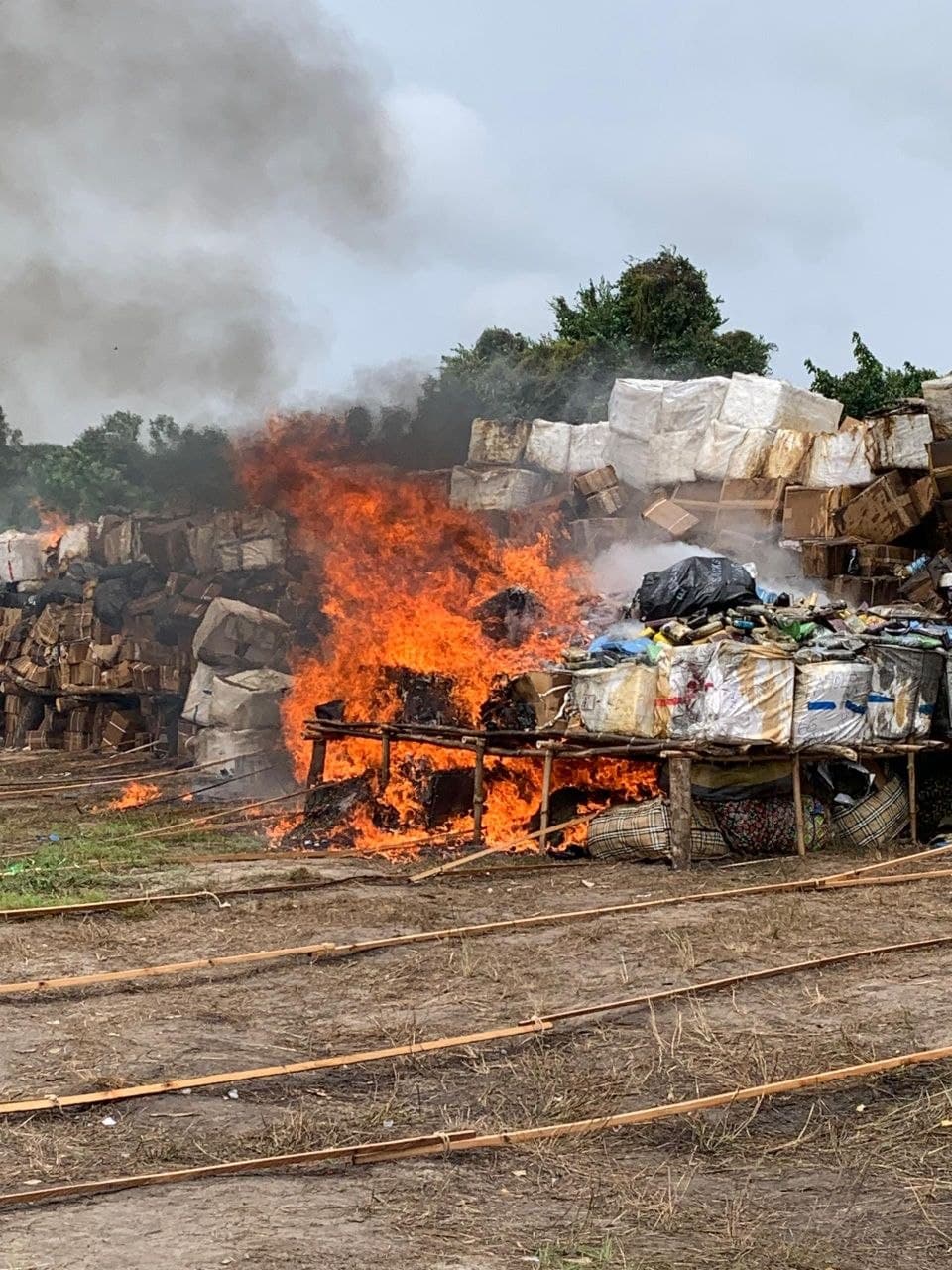
Public Destruction of Illicit Substances
The Lagos State Government has reaffirmed its resolve to intensify the war against drug abuse and trafficking following the public destruction of approximately 300 tons of seized illicit drugs. The exercise, which took place on Monday, involved a vast array of narcotics and psychotropic substances intercepted by the National Drug Law Enforcement Agency (NDLEA) and other strategic security commands within the Lagos axis.
Governor Babajide Sanwo-Olu, represented by the Secretary to the State Government (SSG), Barrister Bimbola Salu-Hundeyin, described the scale of the destroyed exhibits as a sobering reminder of the threat posed by illicit substances. He noted that the destruction was carried out in accordance with the law, demonstrating the effective collaboration between law enforcement, the judiciary, and government institutions.
The scale of what has been destroyed today, about 300 tons of narcotics and psychotropic substances, is a huge and sobering reminder of the enormity of the threat that illicit drugs pose to our communities, our young people, and our collective future.
— Babajide Sanwo-Olu, Governor, Lagos State
Strengthening Enforcement and Supply Chain Disruption
As Nigeria’s commercial nerve centre and a major African urban hub, Lagos State acknowledged its special responsibility to lead the campaign against drug trafficking. The Governor assured that the state would continue to work closely with the NDLEA and the Nigerian Navy to disrupt supply chains and dismantle the criminal networks profiting from the illicit trade.
Beyond simple disposal, the public exercise was intended to send a clear message to traffickers. Sanwo-Olu stated that the state is committed to ensuring that the proceeds of drug crimes are never recycled into further criminal activities, maintaining that the rule of law remains the priority of the current administration.
The destruction of these exhibits today is not a routine exercise in evidence disposal. It is a clear and unequivocal public statement that the proceeds of this illicit trade will never be allowed to fuel further criminality; that our courts and security agencies are resolute in upholding the rule of law.
— Babajide Sanwo-Olu, Governor, Lagos State
Focus on Youth Protection and Rehabilitation
The Governor highlighted that the fight against drugs is a battle for the soul of the state, requiring more than just security operations. He outlined a strategy that includes strengthening public enlightenment, prevention, and providing treatment and rehabilitation for those affected by substance abuse.
The state government aims to provide young people with the necessary support to resist the despair and vulnerability that often lead to drug use. By offering hope and opportunities, the administration hopes to empower the youth to make positive life choices.
Our greatest responsibility as a state is to protect our young people, not only from the drugs themselves, but also from the despair, vulnerability, and criminality that surround drug abuse. We must therefore give our youth knowledge, hope, opportunity, and the confidence and audacity to choose a better path.
— Babajide Sanwo-Olu, Governor, Lagos State
A Call for Collective Society Response
Sanwo-Olu called for a sustained, whole-of-society response to the drug crisis, stressing that law enforcement agencies cannot win the war alone. He urged religious and community leaders, schools, families, and civil society organizations to actively participate in the campaign.
He concluded by commending the officers of the NDLEA and its Chairman, Brigadier General Buba Marwa, for their professionalism and courage in intercepting the substances. The exercise served as a call to action for all stakeholders to renew their commitment to building a drug-free society where the next generation can succeed.
- Collaboration with NDLEA and Nigerian Navy to dismantle networks.
- Expansion of public enlightenment and prevention programs.
- Investment in treatment and rehabilitation for substance abuse victims.
- Commitment to preventing the recycling of criminal proceeds into the economy.