Story
Loading the latest story
Please wait while the article is prepared.
Loading article content…
Loading article content…
Story
Please wait while the article is prepared.
Loading article content…
Loading article content…

Business
Key private sector stakeholders have called on the Federal Government to lower taxes and upgrade infrastructure to prevent widespread business collapse and sustain job creation across Nigeria.
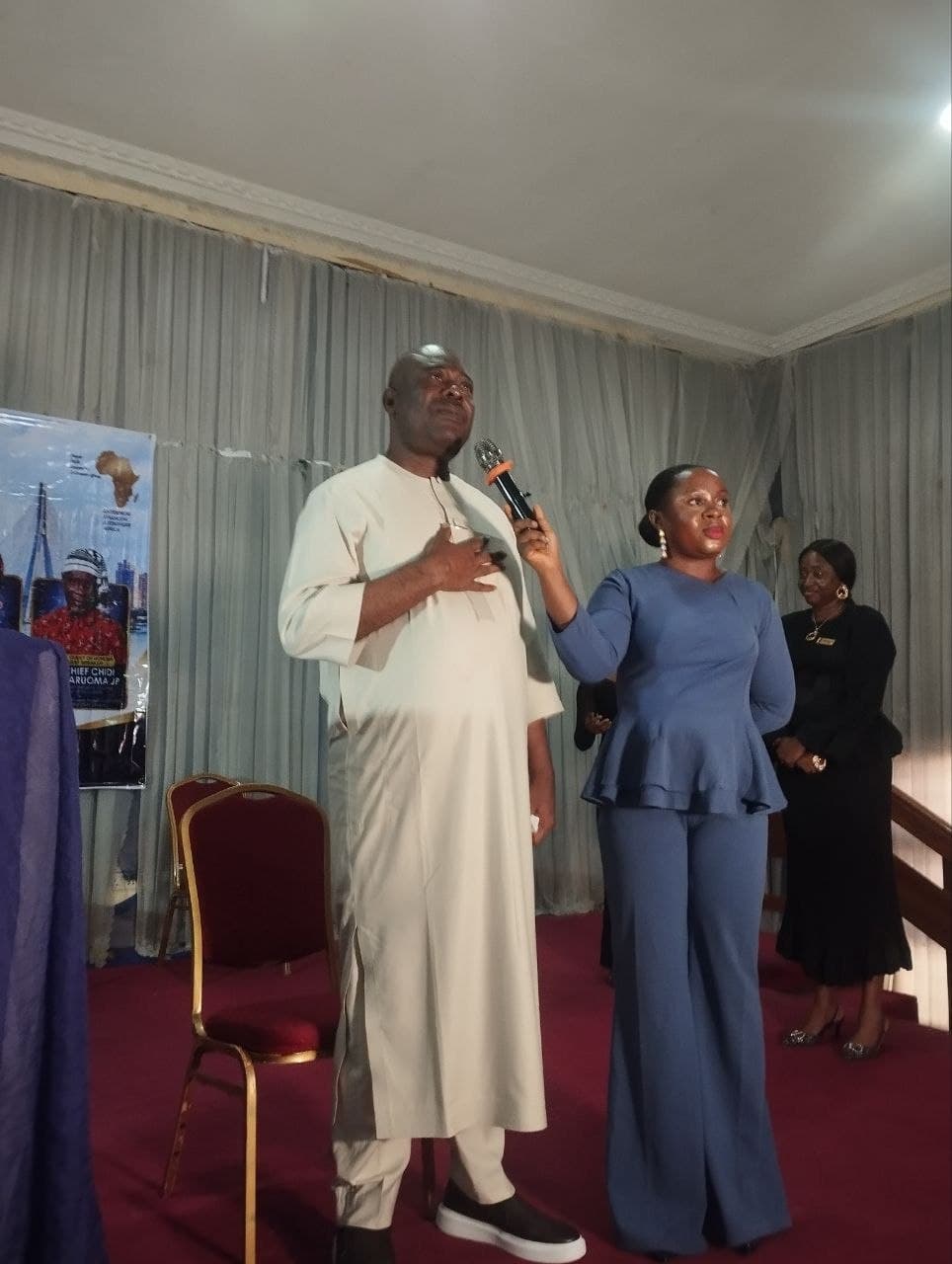
The Federal Government has been urged to reduce taxes, improve infrastructure, and foster a business-friendly environment to enable Nigerian entrepreneurs to survive, create jobs, and contribute effectively to economic growth.
The call was made by the keynote speaker at the second edition of Finance Must Meet Enterprise (FME) 2026, Rotarian Chief Chidi Nkem-Aruoma. He highlighted severe structural bottlenecks confronting commercial operations across the country, particularly excessive taxation, bad roads, inadequate seaport facilities, and weak rail connectivity.
Stressing the urgency of immediate policy adjustments, Nkem-Aruoma warned that the mounting cost of doing business is driving viable enterprises out of the market.
The organised private sector is struggling to make ends meet. I spend a lot of money buying my machineries. I spend a lot of money building human capacity. I spend a lot of money paying wages. Now, at the end of the day, what do you have? High taxes. And that is why most of the big companies are leaving the country.
— Rotarian Chief Chidi Nkem-Aruoma, Keynote Speaker and Immediate Past President, Umuahia Chamber of Commerce
So we are pleading with the government to come down to our area, make things easy for us, reduce taxes, make things easy so that people can be able to do business in Nigeria.
— Rotarian Chief Chidi Nkem-Aruoma, Keynote Speaker and Immediate Past President, Umuahia Chamber of Commerce
Nkem-Aruoma described enterprise and finance as intrinsically linked, maintaining that enterprises cannot satisfy their economic and statutory obligations without reliable access to appropriate capital and an enabling operating climate.
He argued that while public authorities establish regulatory frameworks, it is the private sector that creates wealth and drives sustained employment.
How does enterprise meet finance? Both are symbiotic. If there is no enterprise, there is no finance. Just like I tell my people, government does not create wealth. The organised private sector creates wealth because we create wealth. We do the employment and we push to see that things move the right way. Government does not manage businesses. Entrepreneurs manage businesses.
— Rotarian Chief Chidi Nkem-Aruoma, Keynote Speaker and Immediate Past President, Umuahia Chamber of Commerce
And what we are asking for is that you should be able to give the entrepreneurs a level playing ground to be able to harness what we have to give you the best of everything.
— Rotarian Chief Chidi Nkem-Aruoma, Keynote Speaker and Immediate Past President, Umuahia Chamber of Commerce
He further noted that operators require viable returns on investment to keep businesses afloat, pay wages, and remit revenue back to the state.
Here, finance needs to meet enterprise because if I am doing business and there is nothing coming out of it, how do I pay my taxes? How do I pay my staff salaries? How do I buy my equipment?
— Rotarian Chief Chidi Nkem-Aruoma, Keynote Speaker and Immediate Past President, Umuahia Chamber of Commerce
Turning to sub-national economic development, the business leader commended Abia State Governor Alex Otti for executing measures aimed at revitalising the local business climate and backing small and medium-scale enterprises (SMEs).
He singled out Aba as a vital commercial and industrial engine, crediting the city's commercial resilience to its indigenous entrepreneurial capacity while demanding corresponding federal intervention.
Our governor, His Excellency Alex Otti, has made things so beautifully easy for entrepreneurs to thrive. Aba today is the giant of SMEs. What you cannot find in Aba, in Abia State, does not exist.
— Rotarian Chief Chidi Nkem-Aruoma, Keynote Speaker and Immediate Past President, Umuahia Chamber of Commerce
Nkem-Aruoma, who served as the immediate past president of the Umuahia Chamber of Commerce, noted that the state's commercial strengths require matching federal infrastructure support so that local enterprises can operate at optimum capacity.
Also addressing participants, Ibeh explained that the initiative was conceived to close the gap between capital providers and entrepreneurs, pointing out that businesses require market intelligence, strategic partnerships, and an enabling ecosystem alongside capital injection.
Ibeh observed that the event's theme, “Financing the Future: Building Resilient Enterprises for Sustainable Economic Growth,” reflected the urgent requirement to prepare businesses to navigate economic uncertainty, attain investment-readiness, and translate financing into measurable productivity and innovation.
He further advocated for the professionalisation of entrepreneurship and the formal structuring of traditional apprenticeship schemes to produce financially disciplined, scalable, and resilient commercial ventures.
The event also featured the presentation of the FME 2026 Awards to recognise key contributors to enterprise development and innovation, alongside the special investiture of Dr. Adeniyi Samson Adekunle as President/Chairman of the Governing Council of IEAMA to bolster the institute's governance and institutional capacity.