Story
Loading the latest story
Please wait while the article is prepared.
Loading article content…
Loading article content…
Story
Please wait while the article is prepared.
Loading article content…
Loading article content…

Business
The Federal Government has commenced the disbursement of a ₦50,000 grant to over one million nano-businesses to mitigate economic hardship. This initiative targets the country's most vulnerable traders to stimulate grassroots productivity and bolster household incomes.
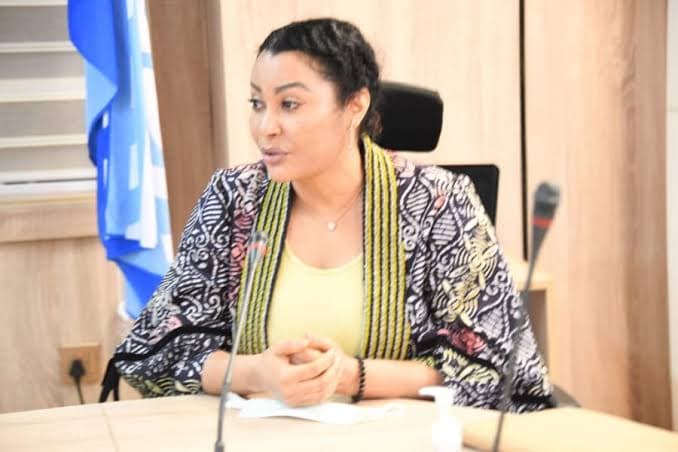
The Federal Government of Nigeria has officially flagged off the disbursement of ₦50,000 grants targeted at nano businesses across all 774 local government areas in the country. This move is part of the Presidential Subsidy Relief Program, designed to cushion the effect of recent economic reforms on the most vulnerable commercial actors in the economy.
The program, coordinated through the Ministry of Industry, Trade and Investment, seeks to provide direct financial support to petty traders, artisans, and street vendors. By injecting liquidity into the bottom of the economic pyramid, the government expects to stimulate local productivity and increase the purchasing power of low-income earners.
The initiative focuses on businesses that typically operate with less than three employees and have limited access to formal credit facilities. Officials have emphasized that the selection process was digitized to ensure transparency and prevent the diversion of funds to unintended beneficiaries.
The Minister of Industry, Trade and Investment explained that the grant is not a loan and does not require repayment, positioning it as a pure social intervention tool aimed at the very base of the Nigerian market structure.
This initiative is a cornerstone of the administration’s commitment to inclusive growth. By empowering one million nano businesses, we are directly impacting the livelihoods of millions of households who depend on these small trades for their daily survival.
— Dr. Doris Uzoka-Anite, Minister of Industry, Trade and Investment, Federal Republic of Nigeria
To ensure equity, the government allocated a specific quota to each of the 774 local government areas. Data from the Bank of Industry (BoI) was used to verify the identities of the applicants through their Bank Verification Numbers (BVN) and National Identification Numbers (NIN), ensuring that the funds reach genuine small-scale entrepreneurs.
Beneficiaries were selected based on specific criteria, including the nature of their trade and their historical contribution to local markets. The ministry noted that the disbursement would occur in phases to manage the high volume of transactions and ensure that technical hitches are minimized during the process.
Beyond the initial cash injection, the government plans to integrate these nano businesses into a broader database for future interventions. This will allow for better planning in areas such as vocational training and micro-insurance schemes tailored specifically for the informal sector.
The administration has called on state and local governments to provide a conducive environment for these small businesses to thrive, noting that the federal grant serves as a catalyst rather than a total solution for economic stability.
We are not just giving money; we are creating a roadmap for formalization. As these businesses grow, they will transition from nano to small-scale enterprises, eventually contributing more robustly to the national Gross Domestic Product.
— Mr. Olukayode Pitan, Managing Director, Bank of Industry
Monitoring teams have been deployed to ensure that the impact of the grants is documented and that the intended goal of business sustenance is met across the federation.