Story
Loading the latest story
Please wait while the article is prepared.
Loading article content…
Loading article content…
Story
Please wait while the article is prepared.
Loading article content…
Loading article content…

News
Traditional and religious leaders in Yewaland, Ogun State, joined the Olu of Ilaro, Oba Kehinde Olugbenle, in declaring support for eradicating harmful cultural practices against women and girls at a town hall meeting organised by CEWHIN with Ford Foundation support.
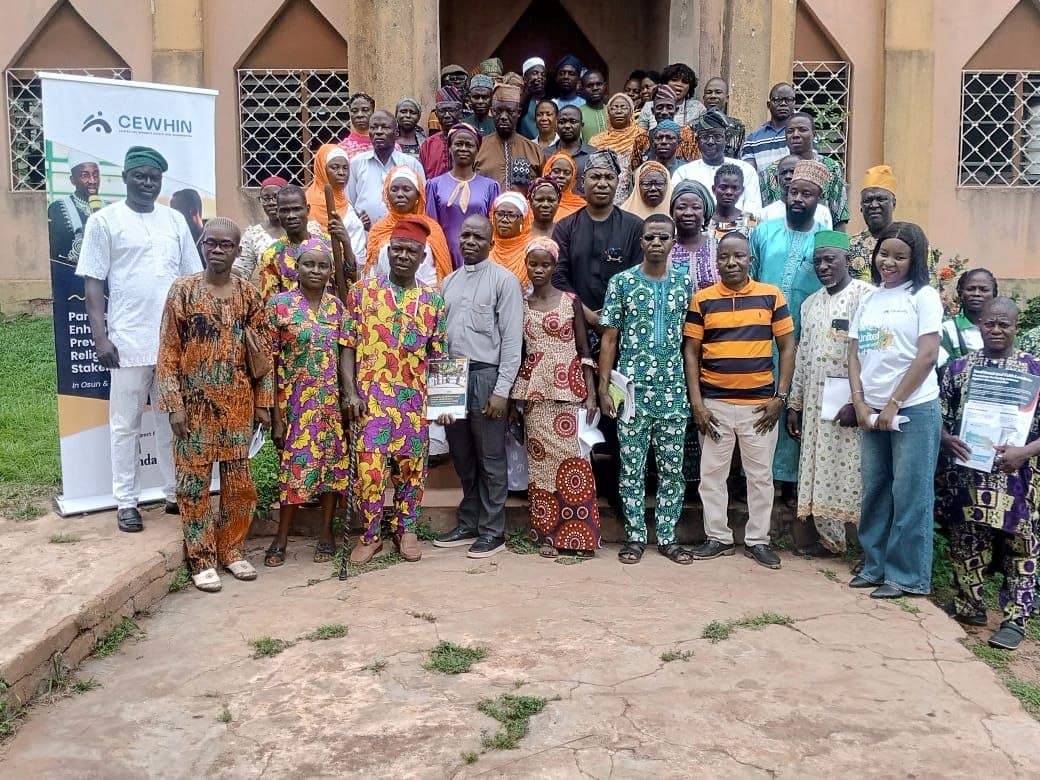
For generations, many women and girls in communities across Nigeria have lived under the weight of cultural practices that limited their opportunities, silenced their voices and, in some cases, exposed them to violence and discrimination. But in Yewaland, Ogun State, a different conversation is taking shape. Inside a crowded town hall in Ilaro, traditional rulers, religious leaders, youth representatives, artisans, women groups, civil society organisations and security agencies gathered not to defend old customs, but to question those that continue to harm women and girls.
At the centre of the conversation was a powerful message from the Olu and Paramount Ruler of Yewaland, Oba Kehinde Olugbenle: culture should uplift people, not hold them back. Represented by Chief Ayorinde Dawotola, the Otunba Agoro of Ilaro and Secretary to the Olu of Ilaro Council, the monarch joined other stakeholders in declaring support for the eradication of harmful cultural practices that undermine the growth, dignity and well-being of women and girls. The gathering, organised by the Centre for Women's Health and Information, CEWHIN, with support from the Ford Foundation, focused on preventing violence against women and girls and strengthening partnerships among traditional and religious leaders across Ogun State.
Acknowledging that harmful practices have often been justified in the name of tradition, Oba Olugbenle described the campaign against violence and discrimination as an ongoing struggle, noting that the focus has been on preventing violence against women and children, particularly the girl child, and addressing cultural practices that hinder women's development.
This is one of several programmes of this nature that have been held in recent times, both in Abeokuta and Ilaro. The focus has been on preventing violence against women and children, particularly the girl child, and addressing cultural practices that hinder women's development and, in some cases, are harmful to their growth and well-being.
— Oba Kehinde Olugbenle, Olu and Paramount Ruler of Yewaland
One of the strongest messages from the meeting was the need to separate cultural heritage from practices that violate human dignity. According to the monarch, culture is not static and should evolve to reflect society's progress.
Culture is dynamic; it evolves with time. We cannot continue with practices that are harmful to our collective interests. Our women have gone through a lot because some traditions have placed barriers before them and prevented them from achieving their full potential.
— Oba Kehinde Olugbenle
His words reflect a growing movement across Africa where traditional institutions are increasingly using their influence to champion education, gender equality and human rights while preserving the positive aspects of indigenous culture. Rather than seeing culture and development as opposing forces, participants argued that communities can embrace both by retaining traditions that promote harmony and discarding those that perpetuate suffering.
For a long time, many Africans were made to believe that their culture had no value. Today, we are reassessing that belief. The challenge is to identify what should be retained and what should be changed. We must preserve cultural values that promote societal progress while discarding practices that are harmful to human dignity and development.
— Oba Kehinde Olugbenle
Nigeria has enacted laws aimed at protecting women and girls from gender-based violence, female genital mutilation and other harmful practices, yet many advocates argue that legislation alone cannot solve the problem. The monarch noted that while legal frameworks exist, effective enforcement remains a major challenge.
There are sanctions for those who violate these laws, but enforcement remains critical. Nigeria has made considerable progress by putting the necessary legal frameworks in place. However, there is often reluctance to fully enforce the laws. Government must be encouraged to consistently apply the law and ensure that offenders are held accountable.
— Oba Kehinde Olugbenle
For CEWHIN Senior Programme Officer, Julian Afachung, the success of efforts to prevent violence against women and girls largely depends on the involvement of those who command trust within communities. She explained that the initiative was designed to strengthen collaboration among traditional and religious leaders, whose voices often shape social norms and influence behaviour - particularly in rural communities where traditional and religious institutions remain central to everyday life.
Beyond governments, organisations and traditional institutions, participants also drew attention to the family as the first line of defence against harmful practices. Oba Olugbenle stressed that parents have a responsibility to instil positive values in children from an early age.
Parents have a major responsibility because training begins from birth. They must guide their children and help them understand the values that are beneficial to society.
— Oba Kehinde Olugbenle
As discussions ended, participants agreed that the fight against violence and discrimination requires sustained advocacy, stronger community engagement and continuous public enlightenment. In communities where tradition has long shaped social expectations, the decision by monarchs and stakeholders to challenge harmful practices sends a powerful message: culture should be a tool for empowerment, not oppression. As voices across Yewaland continue to rise in support of safer, more inclusive communities, many hope that future generations of women and girls will inherit traditions that celebrate their dignity, protect their rights and allow them to reach their full potential.