Story
Loading the latest story
Please wait while the article is prepared.
Loading article content…
Loading article content…
Story
Please wait while the article is prepared.
Loading article content…
Loading article content…

Environment
A partnership between MTN Foundation and CleanAce Foundation is training hearing-impaired Nigerians in fabric care and dry-cleaning skills, transforming unemployment into entrepreneurship and challenging societal stereotypes about disability and capability.
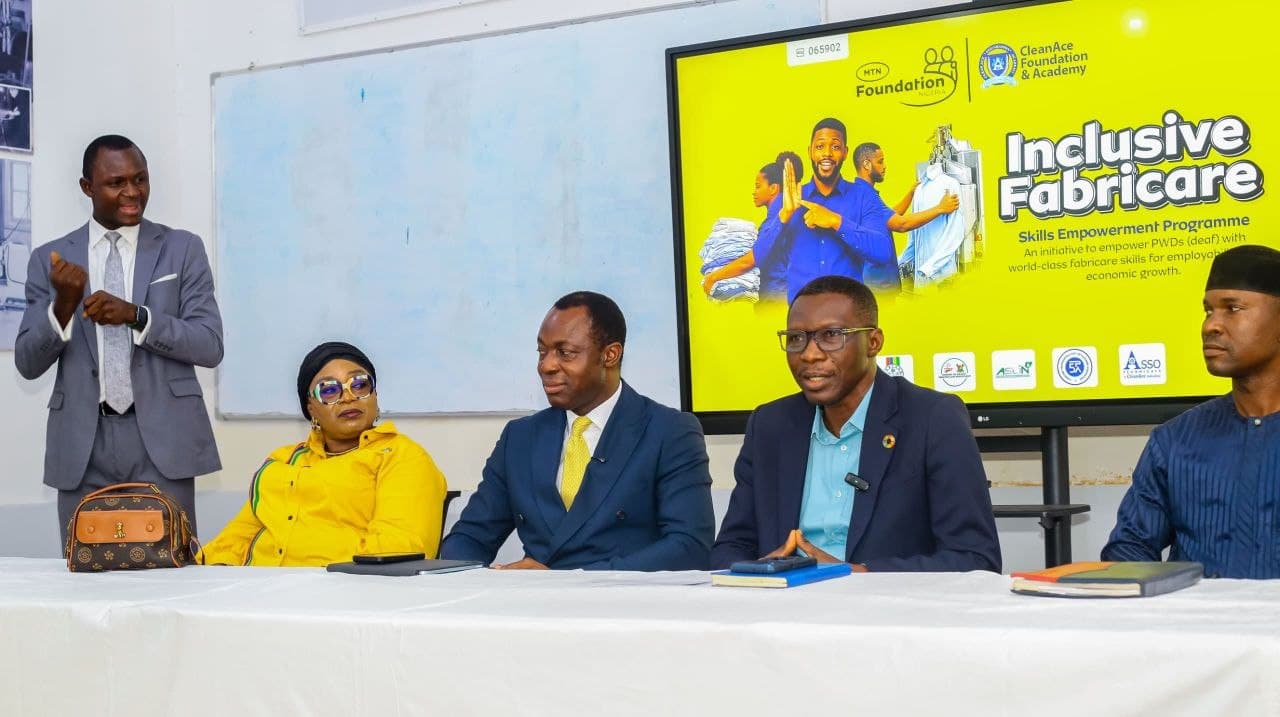
For many Nigerians living with hearing impairment, the search for meaningful employment often ends before it begins. But inside a bustling fabric care facility in Lagos, a different story is unfolding — one stitched together by hope, determination and an unwavering belief that disability should never define destiny. A new partnership between MTN Foundation and CleanAce Foundation and Academy is aimed at equipping persons living with deafness with practical fabric care and dry-cleaning skills that can lead to employment, entrepreneurship and economic independence.
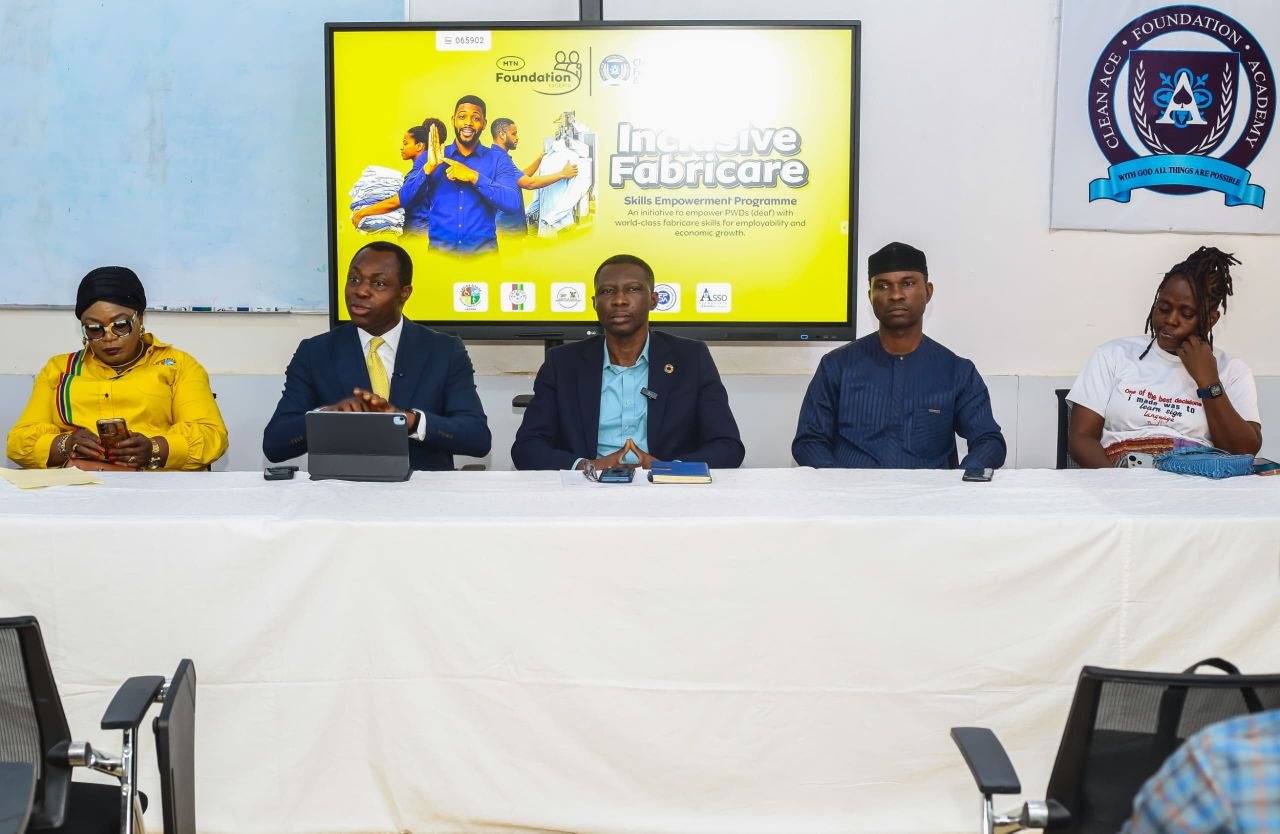
For the Founder of CleanAce Group, Eniibukun Adebayo, the initiative is more than a corporate social responsibility project. It is the culmination of years of observing an overlooked workforce and discovering untapped potential. According to him, the CleanAce Foundation was established to promote professionalism and quality standards in Nigeria's fabric care industry, while the academy was created to train individuals in the technical skills required for modern dry cleaning.
We have the CleanAce Foundation and Academy. The foundation was birthed out of the desire of empowering the nation in quality fabric care and dry-cleaning professionalism.
— Eniibukun Adebayo, Founder, CleanAce Group
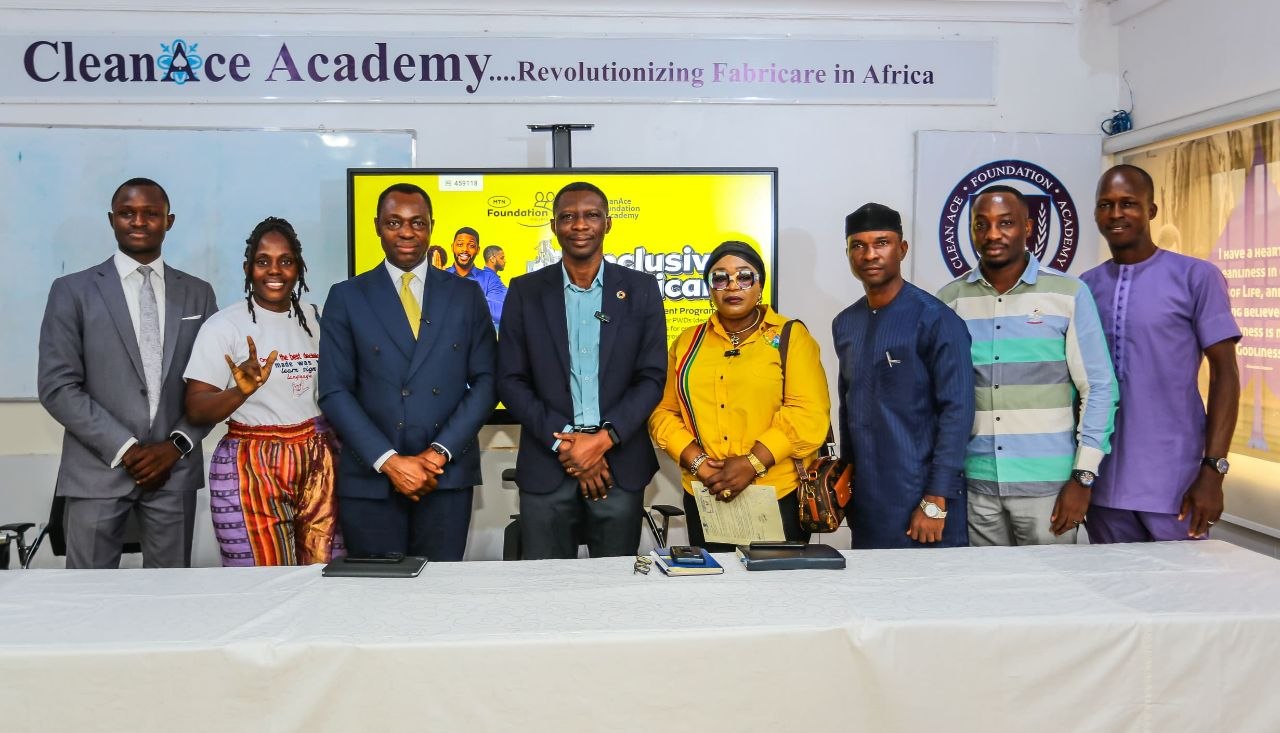
As the organisation expanded its training programmes, it began exploring ways to reach those who had fewer opportunities in society. What began as an experiment with a single deaf trainee soon became a revelation. Adebayo recalled being astonished by the speed with which the young man mastered technical fabric care skills.
We were so impressed. What other people would have learned in a month, he was able to learn in one week. Today, he is one of our best employees.
— Eniibukun Adebayo
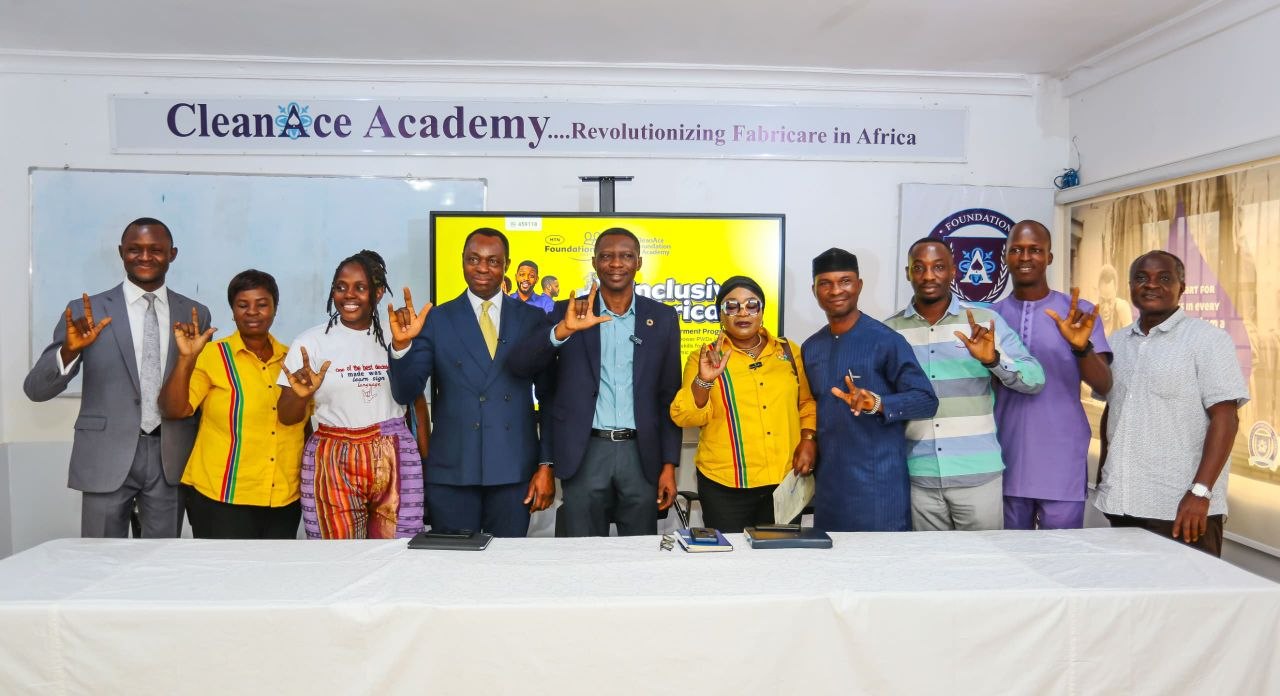
We can train even people that do not have the opportunities, like people with disabilities. Let's give them an opportunity. Let's give them a voice. Let's empower them so they can make money, start their own businesses and get quality jobs.
— Eniibukun Adebayo
That success story inspired the creation of the Inclusive Fabric Care Programme, through which six cohorts of persons with disabilities have already been trained. Now, with MTN Foundation joining the initiative, Adebayo believes the programme is ready to reach far more lives.
For Adebayo, the partnership addresses two challenges simultaneously — unemployment among persons with disabilities and the shortage of skilled workers in the fabric care sector. His vision is simple: create pathways to dignity through work. Some beneficiaries, he revealed, have gone beyond employment to establish thriving businesses of their own.
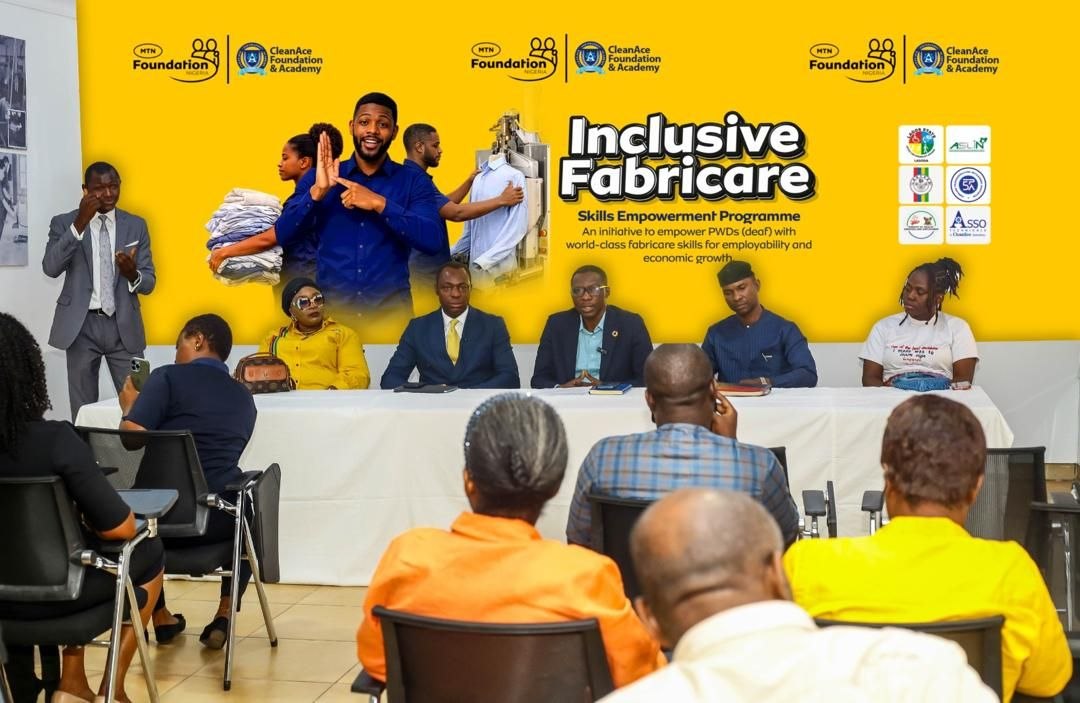
We identified a gap and decided to build a bridge. We train them, some go to work in other companies, some stay with us, and some start their own businesses. Some of them earn as much as N200,000 and above just from ironing. They are diligent and they get the job done.
— Eniibukun Adebayo
Beyond skills acquisition, the programme is also working towards securing government-recognised certification for participants through collaboration with the Lagos State Office for Disability Affairs, LASODA, and the Lagos State Technical and Vocational Education Board. The goal is to ensure graduates leave not only with practical knowledge but also with credentials that can open doors anywhere in the country.
The current pilot cohort will accommodate 30 participants resident in Lagos and registered with relevant disability organisations. The six-month programme will include three months of intensive training, two months of industry internship and a final month of consolidation and assessment.
The truth is we don't even have enough people. Every day, people call us asking for workers with disabilities because they love what they do. There is employment available in excess for even a thousand of them.
— Eniibukun Adebayo
For MTN Foundation, the partnership aligns with a long-standing commitment to disability inclusion. Senior Manager, Programmes Implementation, MTN Foundation, Edward Fagbohun, said the initiative seeks to challenge societal stereotypes while empowering beneficiaries to become economically productive.
We are here today to commence a partnership that will impact lives. We want to change the narrative. We want to show that they also have ability in disability. Together, we are starting this pilot programme by training 30 people with disabilities on how to be productive and useful to society.
— Edward Fagbohun, Senior Manager, Programmes Implementation, MTN Foundation
Fagbohun noted that disability remains heavily stigmatised in many parts of society, making empowerment programmes even more critical. He explained that disability, equity and inclusion remain central to MTN Foundation's interventions, citing scholarship programmes for blind students and previous support initiatives targeted at persons with disabilities.
The impact of the programme is already generating excitement among disability advocates. Chairman of the Lagos Chapter of the Association of Sign Language Interpreters of Nigeria, ASLIN, Olubowale Sodeinde, described the initiative as a transformative opportunity for deaf Nigerians. According to him, inclusion must go beyond sympathy and charity.
Many deaf people around us do not need to be begging. They have abilities. Programmes like this can take many of them off the streets and give them something meaningful to earn for themselves.
— Olubowale Sodeinde, Chairman, Lagos Chapter, ASLIN
For Founder of Friends of the Deaf International Foundation, Funmilola Ogunro, the partnership carries a deeply personal significance. Her advocacy journey was shaped by the life and eventual death of her deaf sister, whose struggles exposed the communication barriers faced by many persons with hearing impairment. Today, through her foundation, Ogunro works to expand educational opportunities for children with disabilities.
Society often sees deaf people as people who need charity. This programme is showing that they need opportunities instead. It is giving them an equitable chance to excel in life.
— Funmilola Ogunro, Founder, Friends of the Deaf International Foundation
Perhaps no testimony captures the programme's impact more vividly than that of Moses Peter Abba. After completing secondary school in Abuja and relocating to Lagos in search of work, he encountered repeated rejection. Hope arrived unexpectedly through a friend from church who introduced him to CleanAce. Though initially intimidated by the sophisticated ironing equipment, Moses embraced the challenge.
I was searching for work here and there. I submitted applications to different companies. When they showed me the iron and the table, I said, 'Wow, this is technical.' I didn't know how to use it. But they asked me to learn, and I said I would try. In two weeks, I could iron independently on my own table.
— Moses Peter Abba, Programme Beneficiary
His journey mirrors the broader message driving the initiative — that when barriers are removed and opportunities are provided, disability becomes secondary to talent, determination and excellence. For the young men and women preparing to join the next cohort, the programme offers more than vocational training. It offers dignity, confidence and a chance to rewrite their future. And in a society where many still underestimate the abilities of persons with disabilities, that may be the most powerful transformation of all.