Story
Loading the latest story
Please wait while the article is prepared.
Loading article content…
Loading article content…
Story
Please wait while the article is prepared.
Loading article content…
Loading article content…

Politics
Professor Christian Harrison says Nigeria's governance crisis now goes beyond individual leadership failures to weak institutions that cannot outlast political office holders. Ahead of the 2027 elections, he urged Nigerians to assess candidates by competence, integrity and track record rather than party loyalty or charisma.
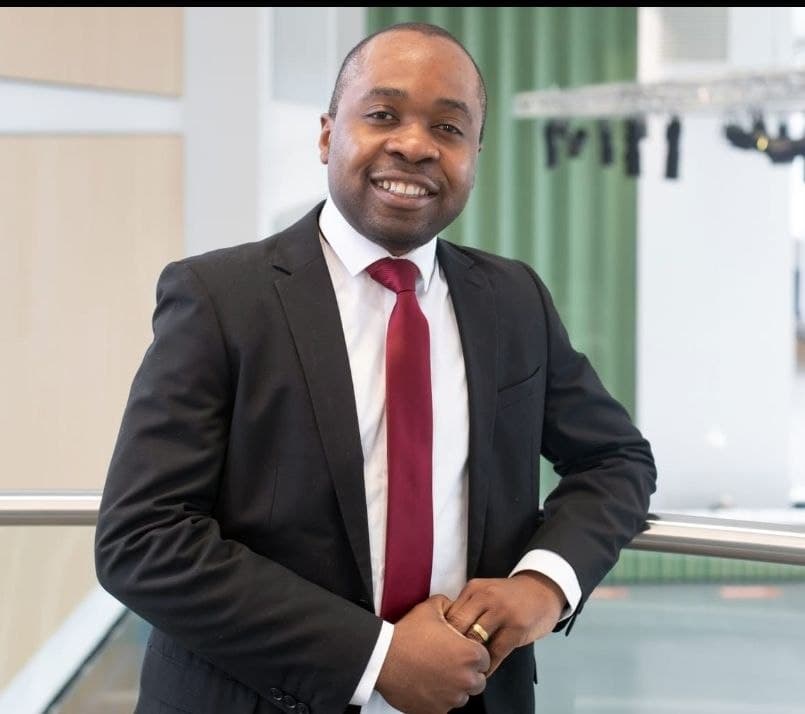
As political realignments ahead of the 2027 general elections gather momentum, leadership scholar and governance expert, Professor Christian Harrison, has said Nigeria's persistent governance challenges have evolved beyond a leadership problem into an institutional crisis.
Speaking during a recent interview, Harrison said decades of unfulfilled promises, weak institutions and poor leadership culture have created a widening trust deficit between Nigerians and their leaders. According to him, while Nigerians remain hopeful during election seasons, recurring disappointments have eroded confidence in leadership across the country.
The problem with Nigeria is that we have a leadership challenge. But beyond leadership, it has now become an institutional challenge as well,
— Professor Christian Harrison, leadership scholar and governance expert
Every election comes with hope and excitement because people believe things will change. Unfortunately, when expectations are not met, people become disappointed and lose trust in their leaders.
— Professor Christian Harrison, leadership scholar and governance expert
He argued that Nigeria's biggest challenge is not the absence of talented individuals but the inability of leaders to establish enduring systems capable of functioning independently of personalities.
Harrison said leadership should be judged by what candidates can offer rather than the political platforms they represent. He said the country must rethink how it rewards leadership and stop elevating mediocrity during elections.
We need to change how we view leadership and how we reward leadership. Most times, people reward mediocrity. During elections, it becomes all about political parties, but are we really looking at what candidates can offer?
— Professor Christian Harrison, leadership scholar and governance expert
He said strong institutions, not powerful individuals, remain the foundation of sustainable development. According to him, systems should be built to endure beyond the tenure of any single office holder.
>> "As a leader, you should be able to reproduce yourself and reproduce systems. In Nigeria, unfortunately, the systems don't work. That remains one of our biggest problems.
When you look at countries like the UK and the United States, regardless of who becomes president or prime minister, there are systems and structures that continue to function. Leaders come and go, but institutions remain.
— Professor Christian Harrison, leadership scholar and governance expert
He added that Nigeria's overreliance on individual leaders has created unrealistic expectations among citizens, producing repeated cycles of hope and frustration.
Harrison identified overpromising by political leaders as one of the recurring mistakes in Nigeria's democratic journey since 1999. He said many politicians enter office with sweeping promises that do not match reality.
Leadership is also about perception. Most politicians come into office promising everything from uninterrupted electricity to economic transformation. The problem is that expectations often do not match reality,
— Professor Christian Harrison, leadership scholar and governance expert
On declining public trust, he described trust as the currency of leadership and said integrity is essential to restoring confidence in government.
Without trust, leadership becomes impossible. Leaders must do what they say they will do. Integrity is critical. If people know that a leader's word can be trusted, then confidence begins to return.
— Professor Christian Harrison, leadership scholar and governance expert
He urged political office seekers ahead of the 2027 elections to focus on realistic promises, honesty and accountability rather than charisma and campaign slogans.
Leadership is not just about charisma. Charisma alone can be manipulative. What matters is character, values, competence and integrity,
— Professor Christian Harrison, leadership scholar and governance expert
Despite his criticism of governance failures, Harrison said Nigeria has produced competent public servants who have made significant contributions to national development. He cited former Finance Minister Ngozi Okonjo-Iweala for her role in securing debt relief for Nigeria and late former Director-General of the National Agency for Food and Drug Administration and Control, NAFDAC, Dora Akunyili for her impact in public service.
We have fantastic people in Nigeria. We have the talent. We have people who have delivered results. Ngozi Okonjo-Iweala did exceptionally well, particularly in debt relief, and Dora Akunyili also left a remarkable legacy,
— Professor Christian Harrison, leadership scholar and governance expert
He also challenged Nigerians to adopt more rigorous standards when assessing candidates for elective office, saying voters should examine their past performance and evidence of delivery.
>> "If somebody says they want to become president or governor, we should be asking questions. What is your track record? What have you done before? How did you handle previous challenges? What evidence is there that you can deliver on your promises?
If I were interviewing someone for a job, I wouldn't ask which political party they belong to. I would ask about their vision, their competence and what they can actually do.
— Professor Christian Harrison, leadership scholar and governance expert
While acknowledging the severe economic hardship currently facing Nigerians, Harrison said economic difficulties are not unique to Nigeria, noting that other countries have faced similar periods. He said the key difference lies in leadership transparency and the presence of clear recovery plans.
>> "People can endure hardship when they know there is a plan and when leaders are honest about the situation. Countries like Rwanda, India and Colombia faced difficult periods, but they communicated clearly with their citizens and provided direction.
The challenge in Nigeria is that there is often a disconnect between promises and reality. Leaders must be honest about what is possible and what is not.
— Professor Christian Harrison, leadership scholar and governance expert
He maintained that Nigeria still possesses enormous potential for growth and development, but said progress will depend largely on the quality of leadership and the strength of institutions.
Nigeria can change. I am optimistic about that. But we need leaders who are honest, visionary, competent and willing to build systems that can survive beyond their tenure,
— Professor Christian Harrison, leadership scholar and governance expert